A storage pouch is rarely the product a customer buys, but it is often the part of the order they keep the longest. Brands order custom fabric storage pouches and bags to protect products in the warehouse and on the way to stores, to give customers a bag worth keeping, and to build travel and organiser formats into a product offer. This guide covers the tasks, the formats that match them, and the sizing, fabric and closure decisions behind them.
Key takeaways
- Custom storage bags serve four recurring brand tasks: protecting products in storage and transit to stores, wardrobe storage the customer keeps, travel and organiser formats sold or gifted with a product, and retail back-of-house storage.
- Formats follow the task: drawstring pouches for everyday storage, zip bags for travel and organisers, flap or button formats for presentation-led storage, larger formats for garments and shoes.
- Storage bags are sized to the item they hold — measured with working clearance — not picked from a standard size list.
- Cotton, muslin, velvet and satin are established ELAPACK pouch fabrics; other fabrics are confirmed in the quotation and on the sample.
- Orders start at 200 pieces per product or component, with a custom sample (USD 30 plus USD 25 shipping, made in 3–5 days) approved before production.
What do brands actually order storage pouches for?
Storage is not one job: warehouse protection, customer wardrobe storage and travel organisers differ in size, closure and finish, even in the same fabric. Four tasks account for most brand orders.
Product protection in storage and transit to stores. Between the factory, the warehouse and the shop floor, products are stacked, shelved and handled. A fabric bag keeps each item separated from neighbouring stock, so surfaces do not rub and hardware does not mark leather or fabric. At this stage the bag is working packaging: quick to load, easy to identify, sized so the product sits without strain.
Wardrobe storage the customer keeps. When the bag leaves the store with the product, it becomes part of the customer's own storage. Handbags rest in their pouches between uses, and seasonal clothing is put away folded in fabric rather than plastic. A bag opened and closed for years is specified differently from warehouse packaging: the closure must stay easy, the fabric pleasant to handle, the branding quiet enough for a customer's home.
Travel and organiser formats. Brands increasingly sell or gift organiser sets with a product: pouches that separate shoes from clothing in a suitcase, zip bags for small items, and garment formats that keep a suit or dress folded and covered in transit. As retail products or gifts with purchase, their finish and branding are specified to retail standard.
Retail back-of-house storage. Stores hold display stock, returns and seasonal items in back rooms where space is tight and items are moved often. Plain, durable bags in a few repeat sizes keep stock grouped and stock takes faster. These orders are usually unbranded or minimally branded, and are reordered as stock turns over.
Which formats cover which storage jobs?
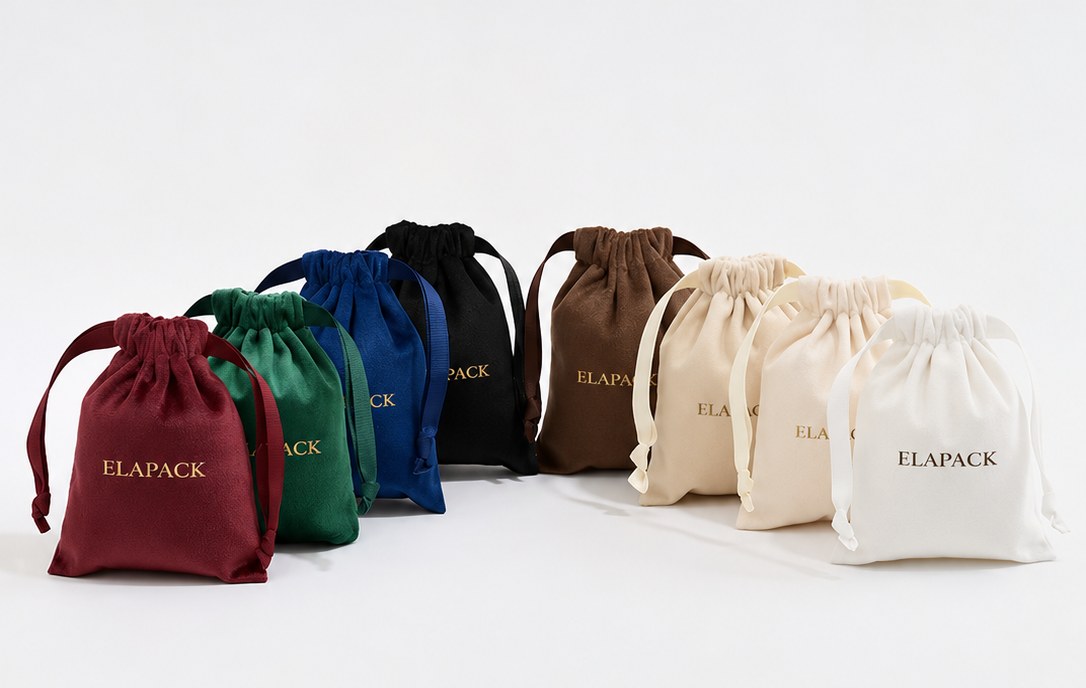
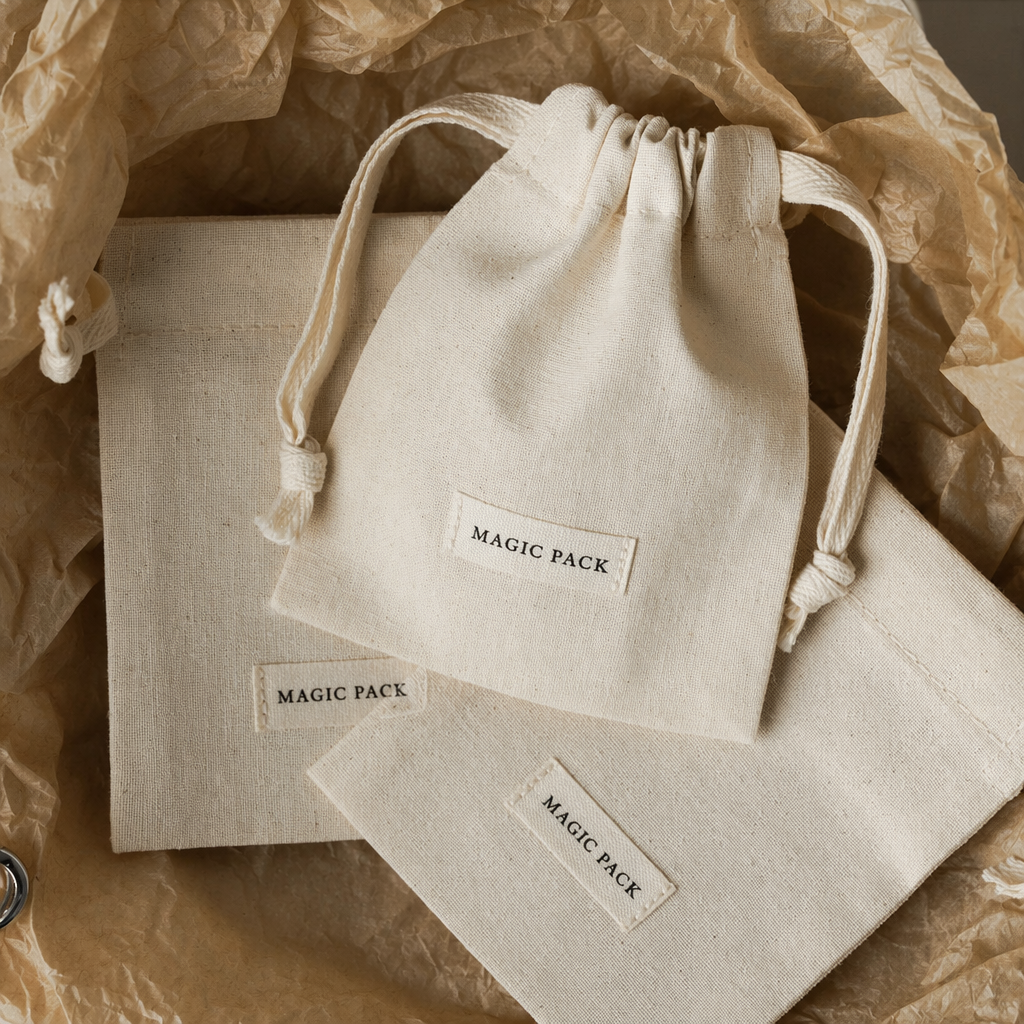
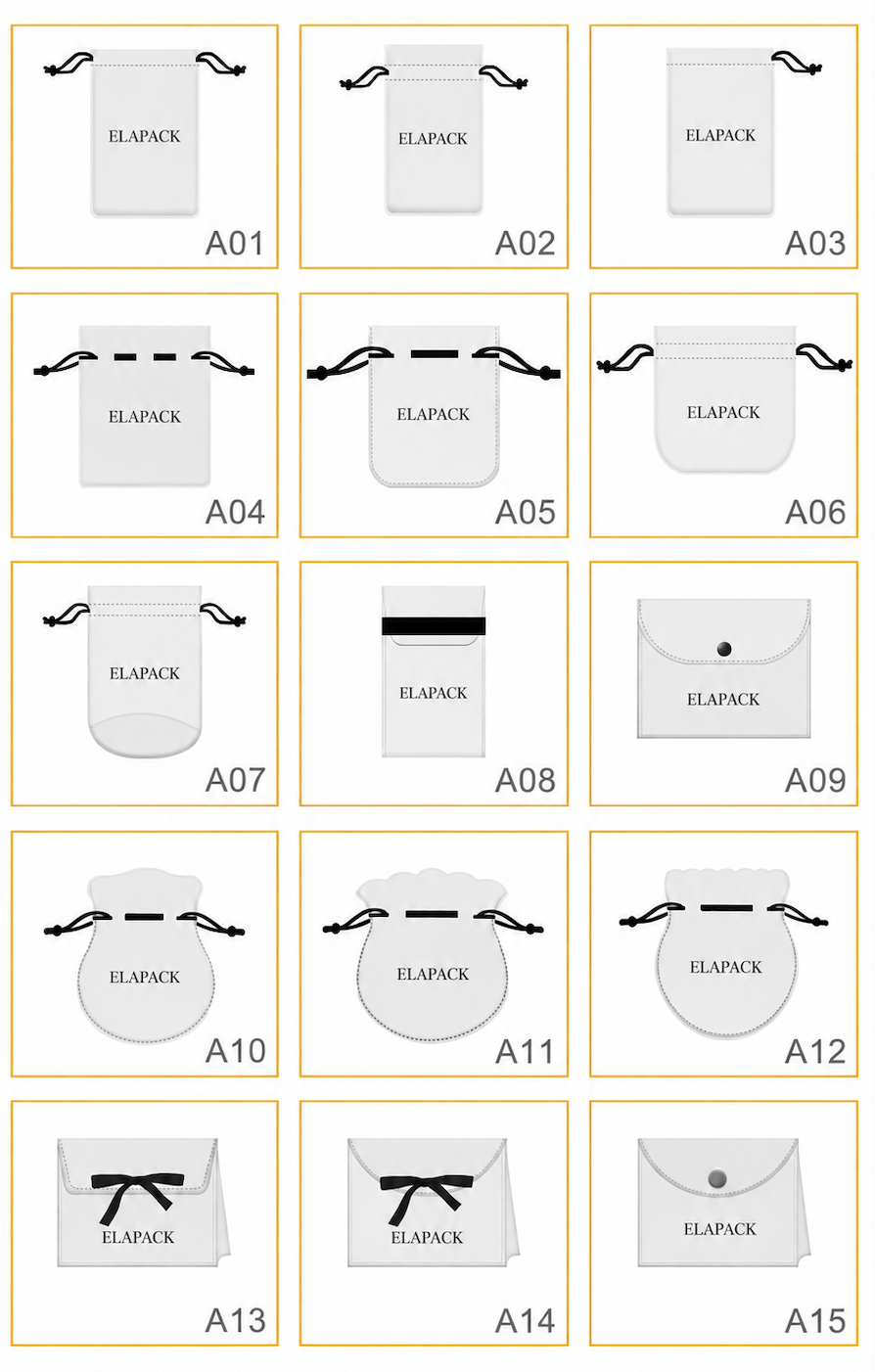
Drawstring storage pouches are the default storage format: quick to load, forgiving on size, and easy to open and close repeatedly. They cover most product-storage duties, from shoes to folded knitwear. Our guide on how to choose custom drawstring bags works through drawstring construction and cord options in depth.
Zip storage bags suit anything that must stay grouped and fully enclosed: travel organisers, accessory sets, and products stored where handling is heavier. The zip gives a defined shape, a cleaner shelf profile and a flatter pack.
Flap and button formats are presentation-led: an envelope or flap pouch reads as part of the product's presentation, not just its protection. They suit items stored in the bag they were received in — small leather goods, scarves, accessories — where opening the bag is part of using the product.
Larger garment and shoe formats extend the same logic beyond a single small product: longer bags for garments, paired or oversized pouches for footwear and handbags, and multi-item bags for sets. These are made to the item's dimensions, not scaled up from a small pouch pattern — hang, fold and hardware positions change with size.
Dust bags sit inside this picture as one specific use — the single-product protective bag a pair of shoes or a handbag is stored in. That use has its own decisions — fabric, closure, how the product rests — covered in depth in the dedicated custom dust bags guide; the formats here are the wider storage family around it.
| Storage task | Recommended format | Closure | Notes |
|---|---|---|---|
| Product protection in warehouse and transit to store | Drawstring pouch sized to the product | Drawstring | Fast to load; keeps items separated and surfaces unmarked |
| Wardrobe storage the customer keeps | Pouch or flap bag in a keep-worthy fabric | Drawstring, flap or button | Specified for repeated opening; quiet branding |
| Travel organisers sold or gifted with a product | Zip bags and organiser sets | Zip | Flat profile for suitcases; retail-standard finish |
| Shoes and handbags in storage | Larger pouch formats, single or paired | Drawstring or zip | Made to the item; hardware and shape set the clearance |
| Garments in storage or transit | Large garment format bags | Zip or drawstring | Sized to the folded or hanging garment |
| Retail back-of-house storage | Plain storage bags in repeat sizes | Drawstring or zip | Grouped by product or size; reordered as stock turns |
How should you size a storage bag?
Storage bags are made to the item, so sizing starts with the stored product, not a catalogue. Measure the item as it will actually be stored — shoes as a pair, a handbag with handles folded as the customer folds them, a garment at its storage fold — then add clearance for the fabric to close without pulling and for the item to go in and out without force.
Three sizing points come up on most projects. First, clearance is functional, not generous. As a general rule for a drawstring format, add at least 2–3 cm to the product's width and 4–5 cm to its height: too little and seams strain and hardware presses through the fabric; too much and the product slides and bunches, which defeats the separation the bag is for. Second, the closure consumes length — the extra height above is largely the drawstring channel and its gathered fabric, which are not usable storage space, and a zip needs a straight run — so confirm usable internal size, not cut size. Third, multi-item formats are sized from the largest item and the combined thickness, not by adding small-pouch sizes together.
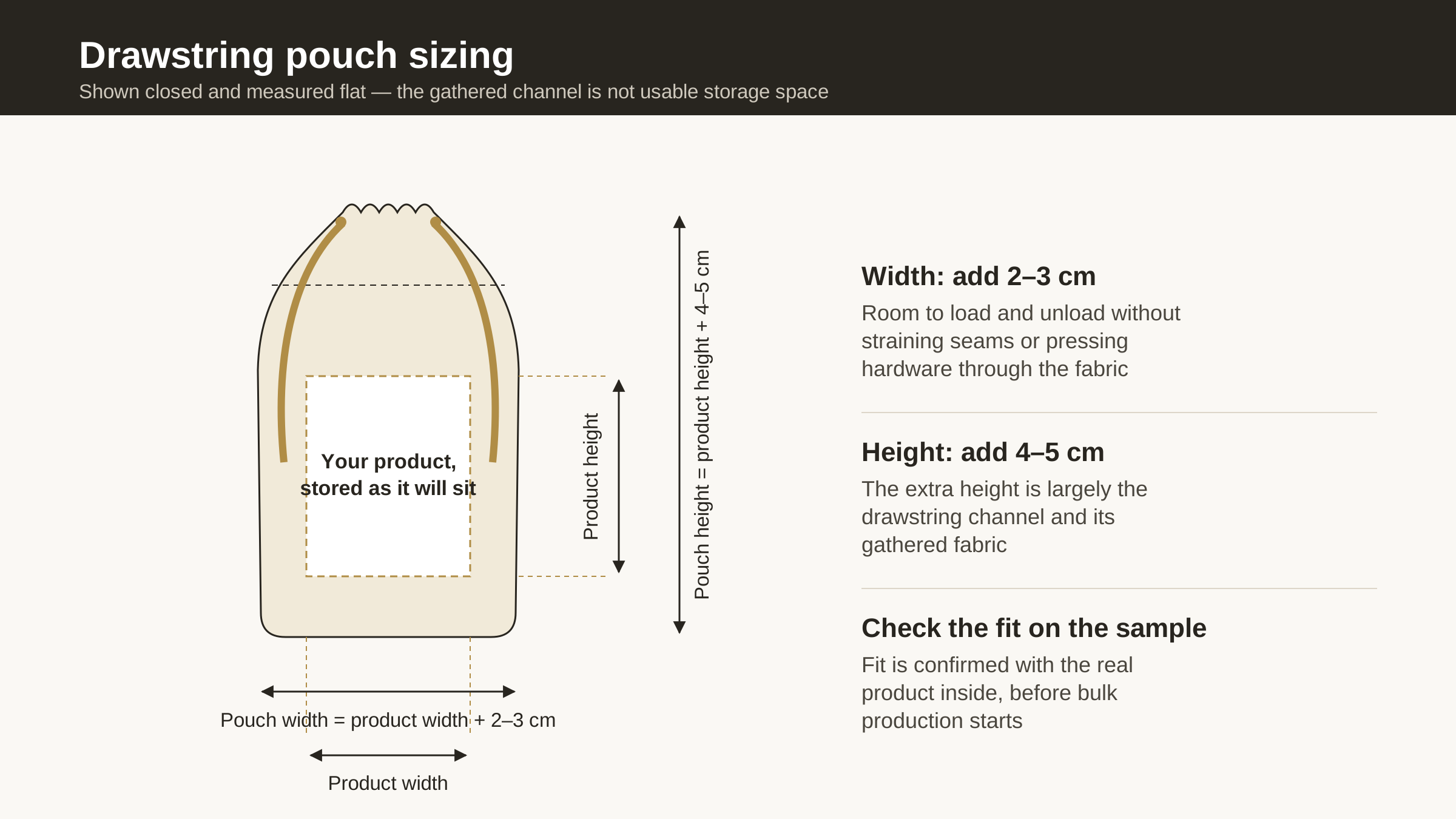
There is no standard size list to pick from: state the item dimensions and how it will be stored in the enquiry, and check the fit on the sample with the real product inside.
Which fabrics and closures suit storage use?
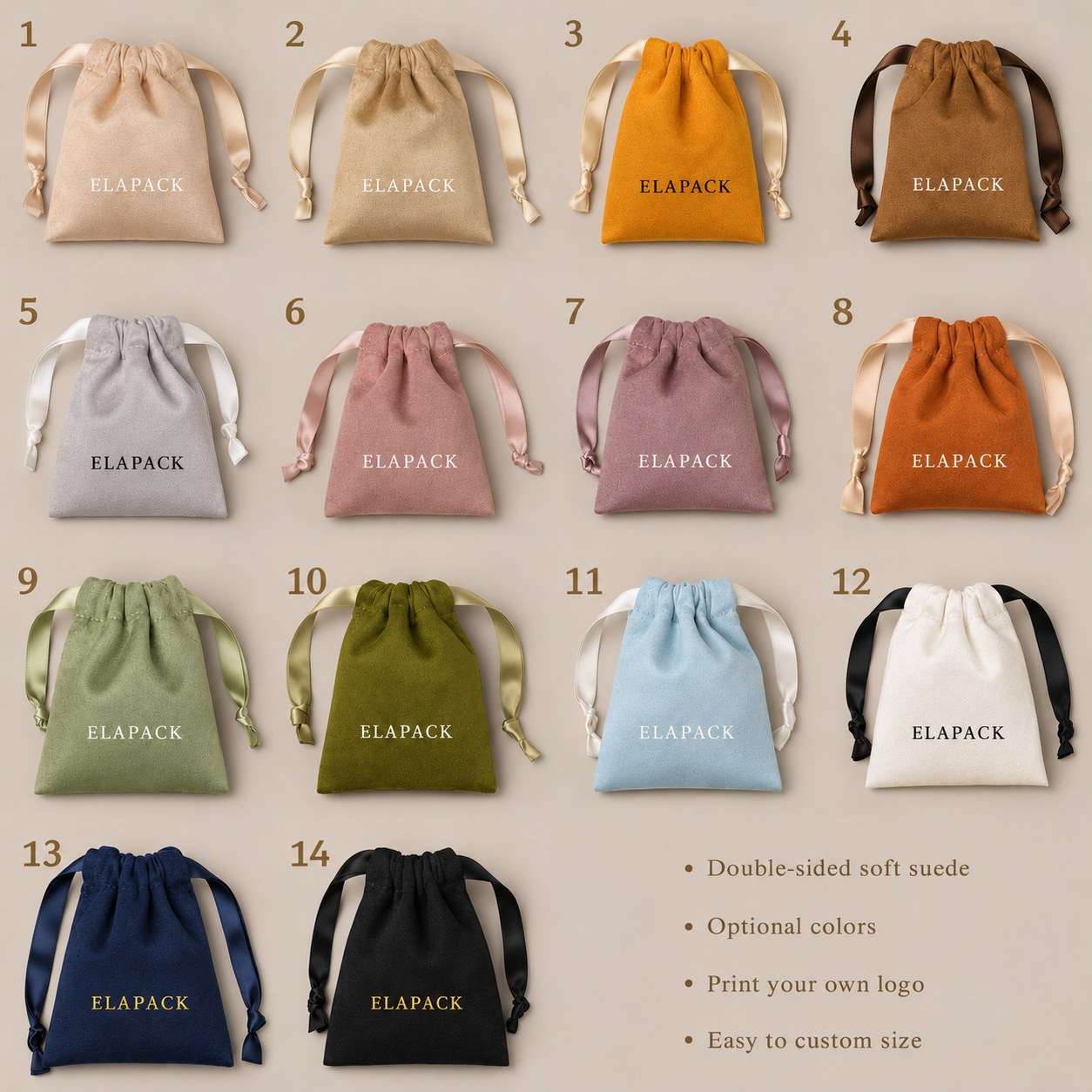
Fabric choice follows the task. Cotton and muslin are the workhorse storage fabrics — soft against product surfaces, light, and easy to print; the custom muslin bags guide covers muslin construction in detail. Velvet and satin are chosen where the bag is part of the presentation — premium accessories, gift-led storage — where hand-feel matters as much as cover. Cotton, muslin, velvet and satin are established ELAPACK pouch fabrics; any other fabric is confirmed in the quotation and checked on the sample rather than assumed.
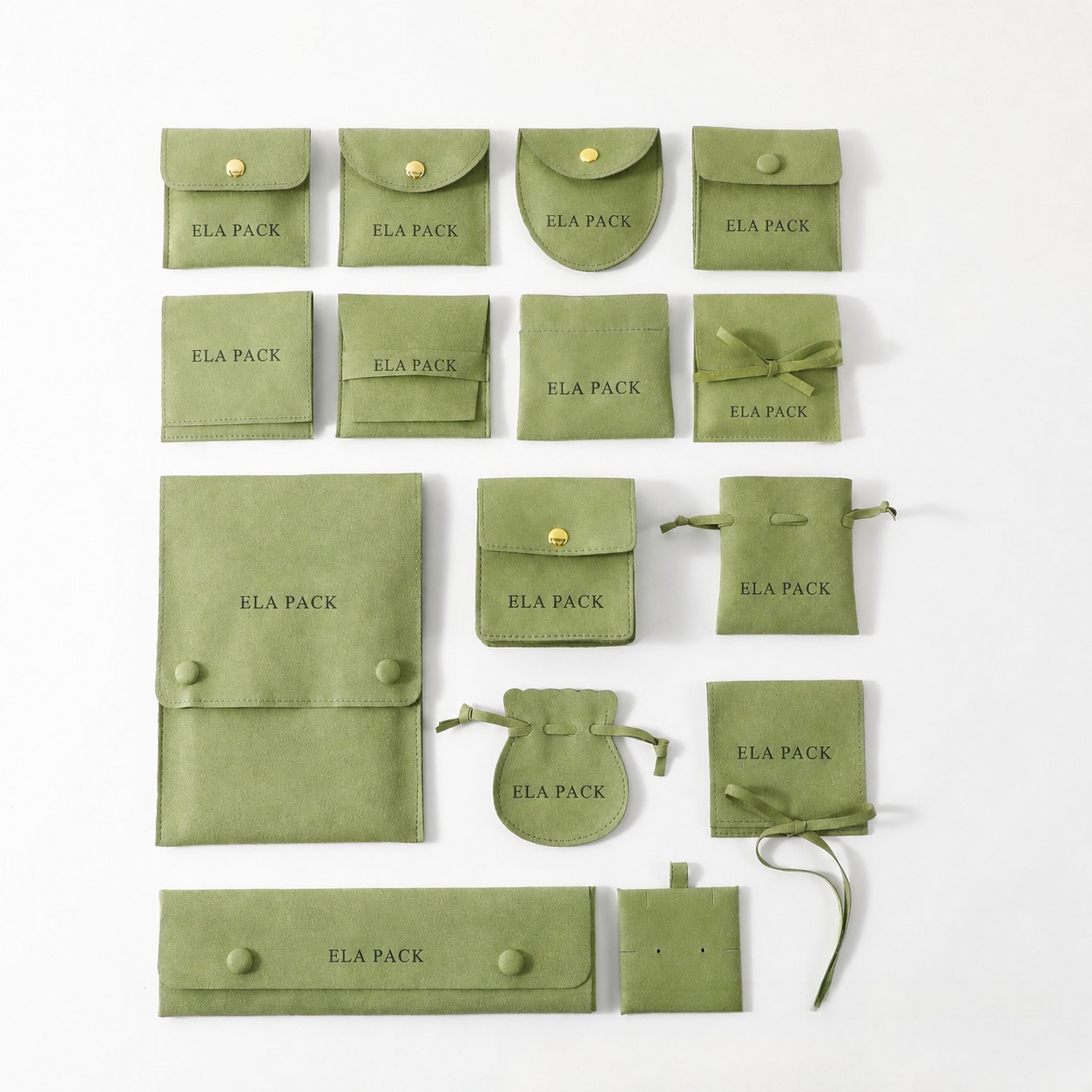
Fabric weight, weave and finish are not fixed standards — they are specified per project against the product's weight and surface, and confirmed in the quotation and sample. A heavy product in a light fabric, or a delicate surface against a coarse weave, shows up immediately on a sample, which is what the sample is for.
Closures divide by how the bag will be used. Drawstring is fastest and most forgiving, and suits bags opened often; a zip gives the most complete enclosure and the flattest pack; flap and button closures trade a little speed for presentation. Branding on storage bags is usually printing or embroidery: printing suits larger, flatter marks and repeat logos across a set; embroidery suits smaller marks on bags meant to be kept. Position and size are set so the mark survives the closure — a logo lost in a gathered drawstring channel is a common sampling catch.
How does ordering storage bags work?
Storage bags are ordered as a product in their own right, or as a component of a wider programme — the full range sits under pouches and bags. The minimum order is 200 pieces per product or component. A custom sample costs USD 30 plus USD 25 shipping, is made in 3–5 days, and the sample fee is deductible against the confirmed first order; fit is checked on that sample with the actual product inside before bulk production. After sample approval and payment, production takes 15–20 days for 200–20,000 pieces. Send the item dimensions, the storage task and the fabric you have in mind through the contact page and expect a reply within 1 business day.
Copy-and-paste storage bag RFQ template
Copy the template below into your email or the contact form and fill in your own project details:
- Item to store: [e.g., folded cashmere sweater]
- Product dimensions (L × W × H): [e.g., 30 × 20 × 5 cm]
- Storage task: [e.g., customer wardrobe storage / transit protection]
- Format and closure: [e.g., cotton muslin pouch with a single ribbon drawstring]
- Quantity per size: [e.g., 500 pieces]
- Branding: [e.g., one-colour black screen print in the centre, 5 × 5 cm — logo file attached]
- Destination: [e.g., DDP to New York, USA]
Questions buyers ask
Are storage bags a different product from dust bags?
A dust bag is one kind of storage bag — the single-product protective bag a pair of shoes or a handbag is kept in. Storage bags are the wider family: larger formats, zip organisers, garment bags and back-of-house bags. If the brief is single-product dust protection, the custom dust bags guide goes deeper; if the brief spans several items or tasks, start here.
Can one bag design cover several product sizes?
Only within limits. A drawstring pouch tolerates a small size range because the closure gathers, but a bag made for the largest item leaves smaller items loose. Most brands order two or three sizes — each size is a separate component at the 200-piece minimum, sampled and costed separately.
Can storage bags carry our branding?
Yes. Logos are printed or embroidered, with the method, size and position confirmed on the sample. Printing suits larger marks and multi-bag sets; embroidery suits smaller marks on keep-worthy fabrics such as velvet and satin.
Ready to specify your storage bags?
Send the item dimensions, the storage task and the fabric you have in mind — or copy the template above — through our contact page. You will receive an itemised quotation within 1 business day.
Sources
- ELAPACK pouch and bag product pages (custom drawstring pouches, muslin bags, velvet and satin pouches), ELAPACK website.
- ELAPACK guides consulted: custom dust bags guide, custom muslin bags guide, how to choose custom drawstring bags.
- Drawstring sizing allowances as published in independent supplier and maker sizing guides (Cottonpouch drawstring bag size guide; CW Packing cotton drawstring bag sizing notes), consulted for the general clearance rule.
- ELAPACK confirmed ordering terms: minimum order, sample fee and timing, production timing and reply time, as published on elapack.com.