
Weight bands, printing capability by weight and use-case mapping are as published by specialist tissue suppliers (tissuemotif.com, checked October 2026). ELAPACK supplies printed tissue as a component of its gift-box programmes — specifications are confirmed per project; the trade terms quoted are its confirmed order terms for boxes (MOQ 200 pieces, 15–20 day production).
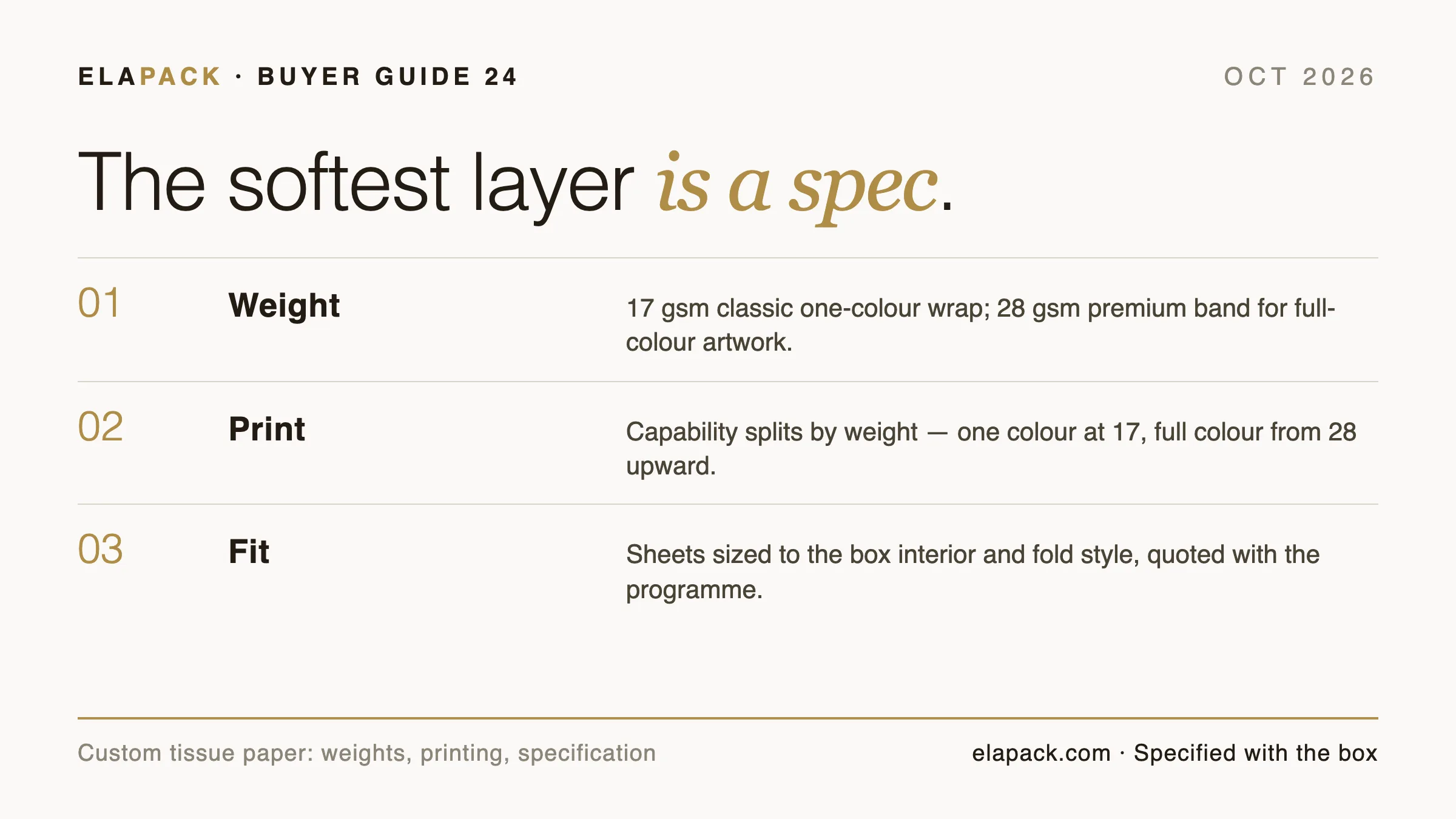
Quick answer: the gsm band decides everything — 17 gsm is the classic branded wrap for one-colour logos at everyday cost, 28 gsm is the premium band that carries full-colour artwork, and 12–14 gsm wraps delicate jewellery while 30–33 gsm lines rigid boxes. Size the sheet to the box interior, and specify tissue with the box, not as an afterthought.
Key facts at a glance
| Item | Figure | Source |
|---|---|---|
| Everyday weight | 17 gsm — one-colour printing, branded wrapping at value cost | As published, tissuemotif.com |
| Premium weight | 28 gsm — one-colour or full-colour printing | As published, tissuemotif.com |
| Band edges | 12–14 gsm delicate wrap; 30–33 gsm heavy lining for rigid boxes | As published, tissuemotif.com |
| Box programme terms | MOQ 200 pieces, 15–20 day production | ELAPACK confirmed terms |
What "custom tissue paper" covers
Custom tissue in practice means one of three jobs: a printed wrap that carries the logo, a plain void-fill that protects the product, or a folded liner that finishes the unboxing. Weight decides which job a sheet can do — light sheets drape and print finely, heavier sheets carry structure — so the enquiry starts with the weight band, not the artwork. In ELAPACK programmes tissue is specified with the rigid box it lines and the insert it softens.
Name the weight band first; the artwork can only be as fine as the sheet that carries it.
The gsm ladder, rung by rung
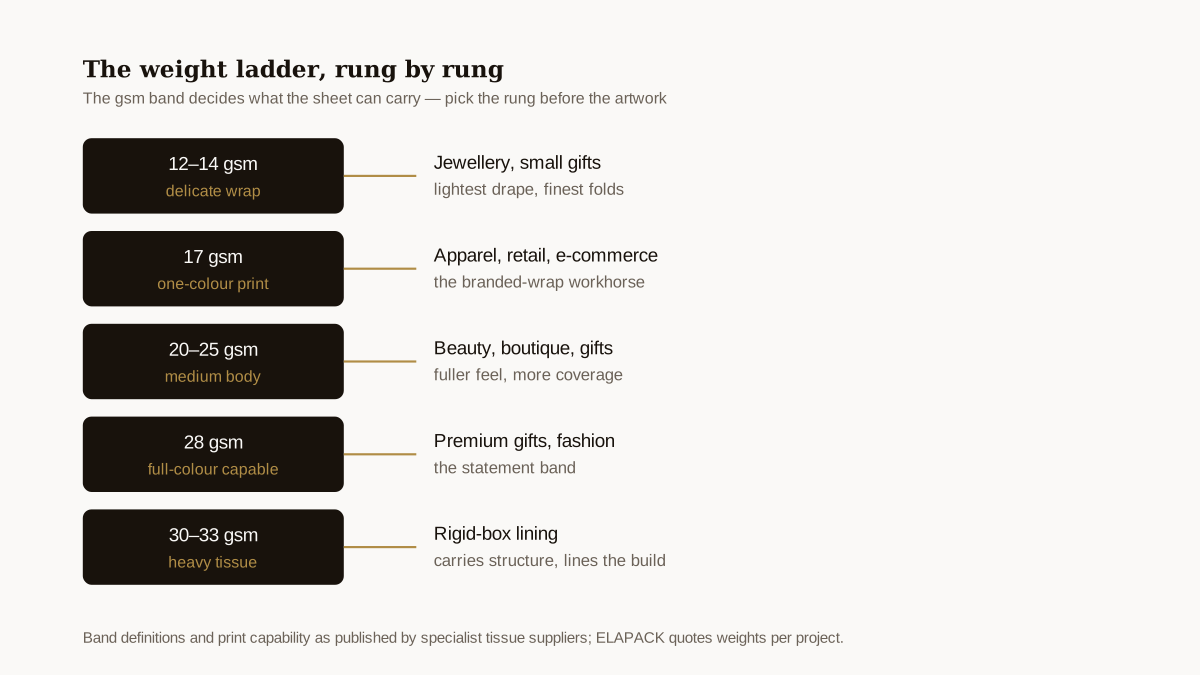
Weight — grams per square metre — is the specification axis for tissue, and the published ladder maps cleanly to use: lower gsm is lighter, softer, more translucent; higher gsm feels fuller, firmer, gives greater coverage (as published on tissuemotif.com). The bands that matter to a packaging buyer:
| Band | Character | Published use |
|---|---|---|
| 12–14 gsm | Very lightweight, delicate | Jewellery, small gifts, decorative wrapping |
| 17 gsm | Classic lightweight, best value | Apparel, retail, accessories, e-commerce; one-colour print |
| 20–22 gsm | Medium-light | Beauty, boutique, gifts |
| 24–25 gsm | Medium weight | Gift boxes, cosmetics, retail |
| 28 gsm | Premium, full-colour capable | Premium gifts, fashion, beauty, branding |
| 30–33 gsm | Heavy tissue | Rigid-box lining, luxury, specialty presentation |
Band definitions and use mapping as published by tissuemotif.com; ELAPACK quotes weights per project on the confirmed specification.
Pick the rung before the artwork — the weight decides what printing is even possible.
Printing: capability splits at 17 and 28
The capability line is published and sharp: 17 gsm supports one-colour printing — simple logos, repeating patterns, clean branded designs; 28 gsm supports one-colour or full-colour, at a higher cost for full colour (as published on tissuemotif.com). Between them sits the practical reality of branded wrapping: most logo tissue is one-colour on 17 gsm, and most brands that upgrade to 28 gsm do it for the paper's feel as much as the print range. Artwork follows print-shop norms across the industry: vector logos, confirmed before production, with a final proof issued before the run (workflow as published by ecoenclose.com and inkablelabel.com).
One colour on 17 gsm is the workhorse; 28 gsm full-colour is the statement — decide which job the tissue does.
Sizing and how tissue rides with the box
Sheet sizes vary by print shop — one stock range offers four sizes at multiple densities (as published on overnightprints.com) — so the buyer's rule is not a stock chart but a fit rule: size the sheet to the box interior and the fold style, and confirm the sheet list on the quotation. In ELAPACK programmes tissue is specified as a component: it wraps the product inside the fitment of a magnetic gift box or ring box, fills the dead space of an eyelash box, and finishes complete presentations in the sets collection. Specified this way, the unboxing reads as one object: box, fitment, tissue, card.
What to put in your enquiry
A tissue enquiry a factory can quote first time carries: the gsm band (or the use case and a request for proposals at two weights); the print scope — one-colour or full-colour, and at which weight that is possible; the sheet size needed against the box interior and fold style; the logo artwork in vector with the print colour reference; the quantity against the box programme's 200-piece minimum; and the need-by date so tissue and box land together. Tissue-specific unit pricing and availability are confirmed per project on the written quotation.
The bottom line
Weight band, print scope, sheet fit — three decisions, in that order, and the tissue stops being packaging filler and starts being the brand layer it already is on the shelf. Contact ELAPACK with the box programme and the tissue scope, and the quotation will state the weight, print and sheet specification that ride with it.