# Custom Booklet Boxes: Book-Style Formats, Hinges and Ordering Data
Key takeaways
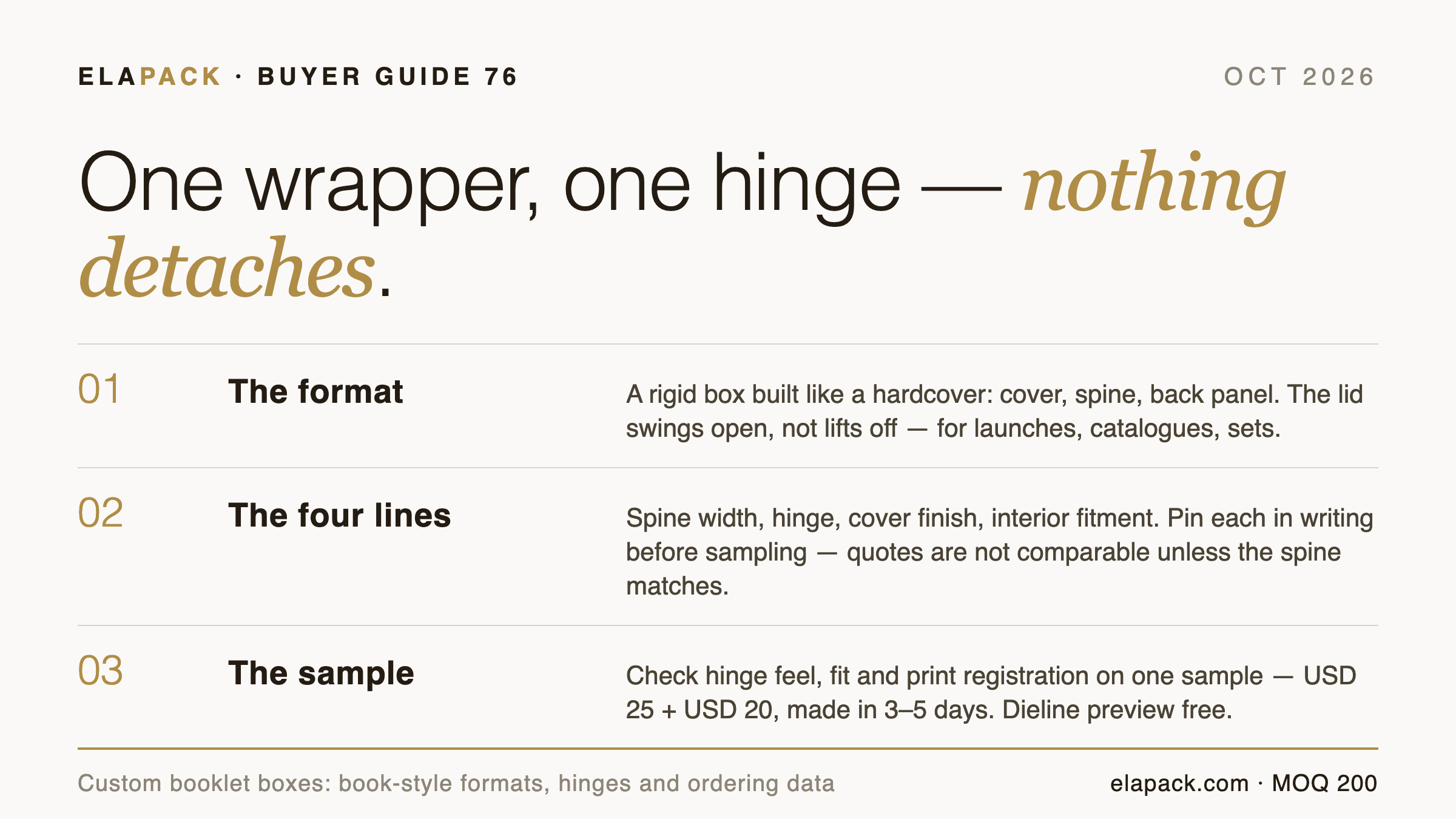
A booklet box is a rigid box built like a hardcover book — one continuous cover, spine and base — and its quote is set by spine width, hinge construction, cover finish and interior fitment.
- Industry catalogues define the format as "a hinged rigid setup box that opens like a book", used for premium presentation and gift sets.
- Spine width, hinge construction, cover finish and interior fitment are the four structural lines that separate quotes.
- The format fits launches, press mailers, catalogues and curated sets; it stacks poorly for high-rotation retail storage.
- Entry order is 200 pieces; a custom sample costs USD 30 plus USD 25 shipping and is built in 3–5 days.
Last updated November 2026.
A booklet box is a rigid box built like a hardcover book: a front cover, a spine, and a back panel, joined so the lid swings open along one edge instead of lifting off. Brands use the format for media kits, catalogues, product launches and multi-piece gift sets, because the opening motion presents the contents like a page instead of a tray. This guide covers where the format fits, how the structure differs from a two-piece rigid box, what goes inside, and the ordering data buyers need before requesting a quote.
Quick answer: choose a booklet box when the opening ritual matters — launches, press materials and curated sets. Choose a two-piece rigid box when storage and stacking matter more. Both share the same wrapped-board construction; confirm hinge style, spine width and interior fitment on a physical sample before mass production.
Key facts at a glance
| Item | Figure | Source |
|---|---|---|
| Minimum order | 200 pieces | ELAPACK confirmed terms |
| Production lead time | typically 15–20 days after sample approval and payment receipt; confirm by order | ELAPACK confirmed terms |
| Custom sample | 25 US dollars plus 20 US dollars shipping, 3–5 days to make | ELAPACK confirmed terms |
| Enquiry response | within one business day | ELAPACK confirmed terms |
What is a booklet box, precisely?
The defining feature is the hinge line. A conventional rigid gift box is a lid-and-base pair: two separate shells, and the lid can be set aside and lost. A booklet box is one continuous wrapper: the front cover rotates away from the base around a spine, the way a book cover opens. Nothing detaches. Supplier catalogues describe the same format: Custom Packly defines it as "a hinged rigid setup box that opens like a book, making it ideal for premium presentation and gift sets."
Inside, the base usually holds a fitment — a recessed board, a moulded cavity or a printed card — sized to whatever the box carries. The interior of a media-kit booklet box often pairs a product cavity on one side with a sleeve for printed pages on the other. The structural build (wrapped greyboard, cover wrapping, board grades) is the same system used across the rigid box line; the booklet format is a configuration of that system, not a different material.
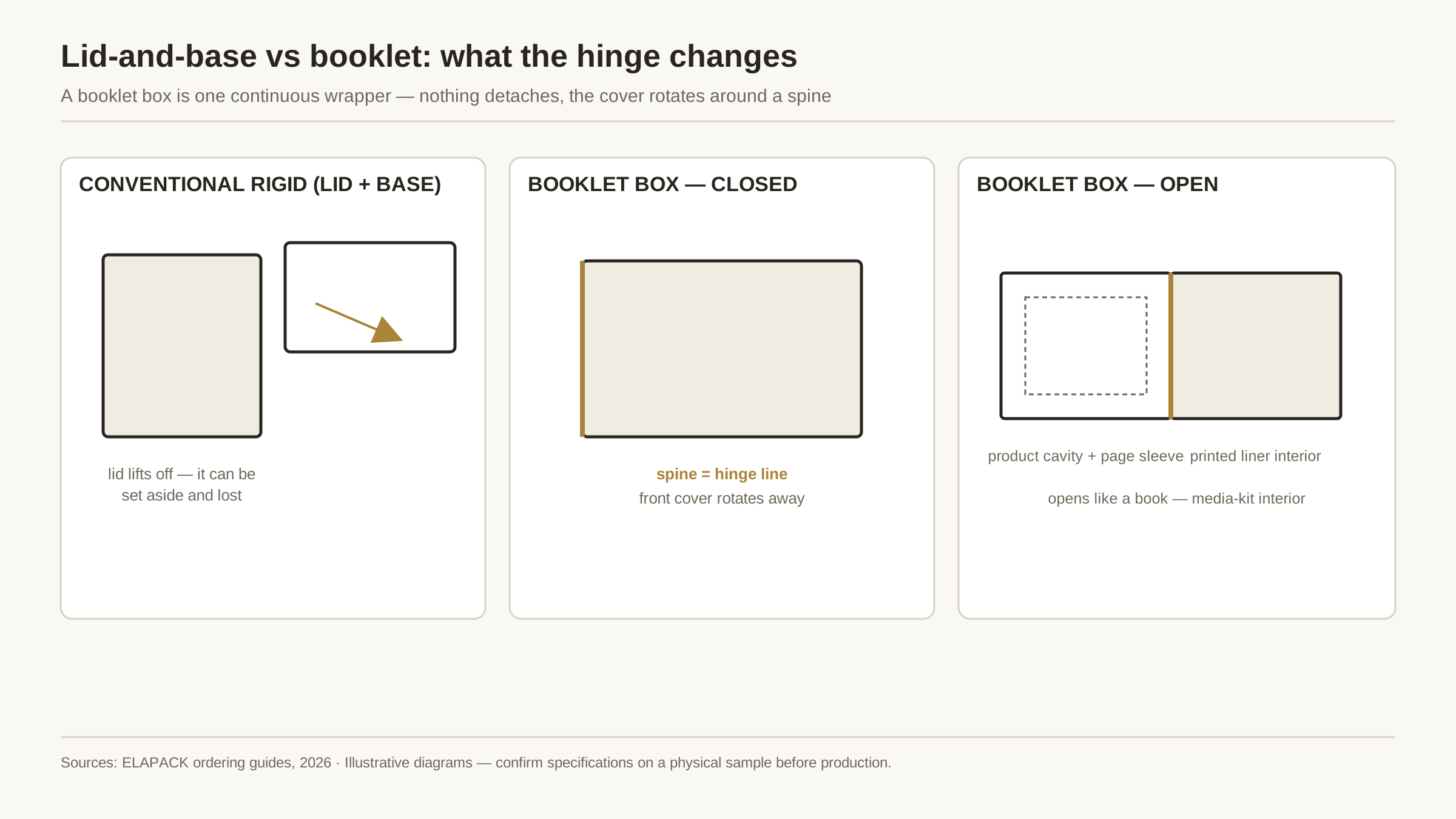
The hinge is the format's defining feature: one continuous wrapper, so no lid can be set aside and lost.
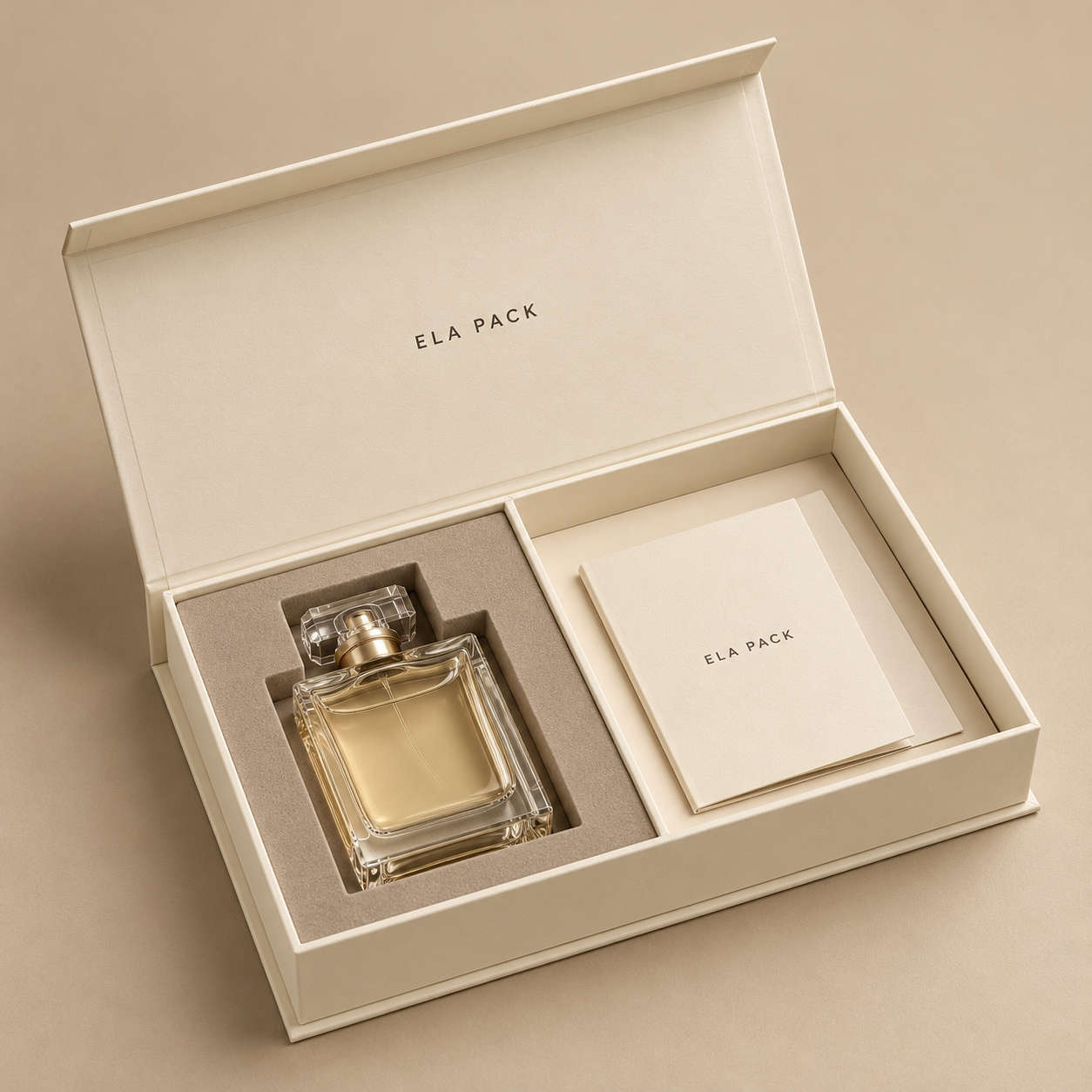
The interior the format is built around: a product cavity on one side of the spine, printed pages in a sleeve on the other. (Illustrative render)
Where does the format fit — and where does it not?
Booklet-style boxes earn their cost in three situations. First, launches and press mailers, where the recipient opens the box once and the reveal is part of the message — the planning side of that use case (what goes in, who receives it) is covered in the PR box guide. Second, catalogue and lookbook packaging, where the box literally houses pages — the format and the content share a logic. Third, curated multi-piece sets, where a wide-spine box can present several items side by side like a spread.
They are a poor fit for high-rotation retail storage. A hinged cover cannot be stacked as flatly as a removable lid, and repeated daily opening is harder on a paper hinge than on a lid that lifts off. For counter stock and refill programmes, a two-piece rigid box or a magnetic closure gift box usually serves better — the magnetic format gives a similar premium open-and-close feel with a fully detachable or fold-over lid, and our comparison of the two closures is covered there.
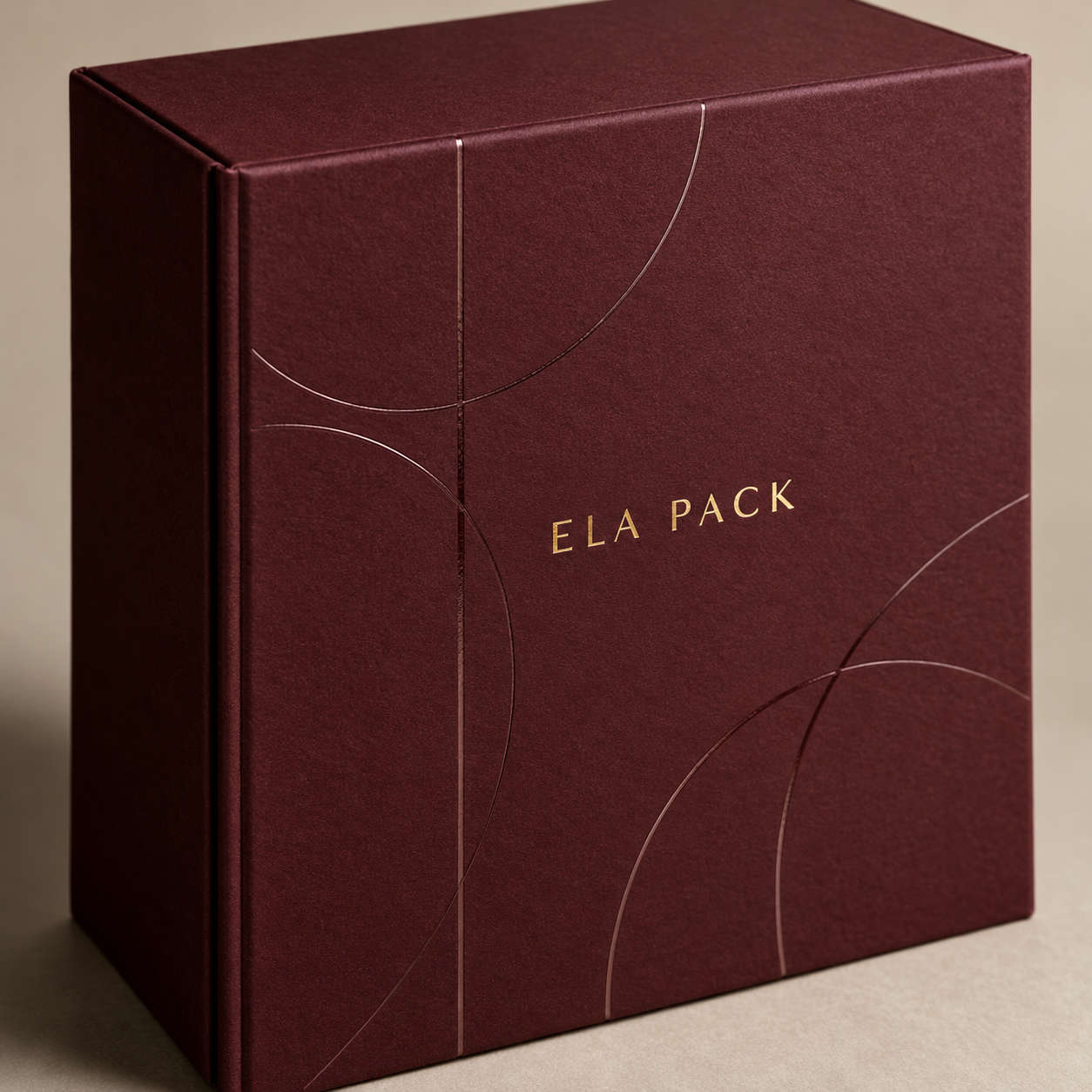
The finished cover as the format delivers it: a foil-stamped mark on the book face — the reveal a launch mailer is built for. (Illustrative render)
Structure decisions that change the quote
Four structural lines separate one booklet box quote from another, and each should be pinned down in writing before sampling:
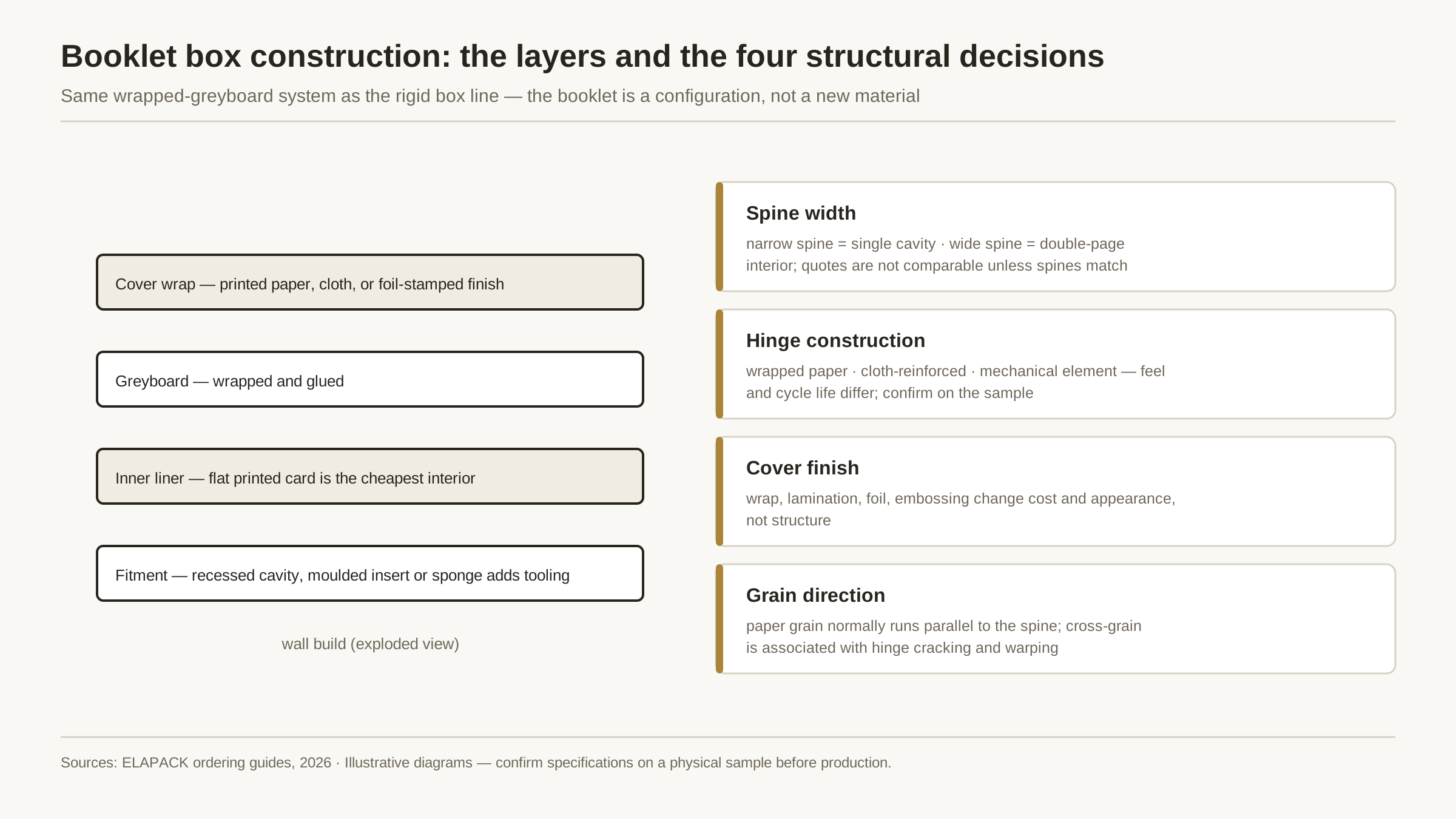
Spine width and hinge construction change board usage and cycle life — two quotes are rarely comparable unless both match.
- Spine width. A narrow spine suits a single product cavity; a wide spine allows a double-page interior with printed liners. The width drives board usage and covering material, so two quotes are rarely comparable unless the spine matches.
- Hinge construction. The opening edge can be a wrapped paper hinge, a cloth-reinforced hinge, or a mechanical hinge element. Each has a different feel and a different cycle life; because life ratings vary by construction and use, confirm the intended hinge style and expected handling on the sample rather than assuming a specification. Two industry practices are worth knowing at this stage. First, in bookbinding the paper grain is normally run parallel to the spine; wrap or board grain running the other way is associated with hinge cracking and cover warping over time, so it is a fair question to put to any factory. Second, a hinged cover without any closing element sits under spring tension and can rest slightly open rather than lying flat — which is why many booklet designs add a closure such as a concealed magnet or a ribbon tie; whether one is needed depends on the cover weight and board of the specific build.
- Cover finish. Wrapping paper, printed laminated paper, foil stamping and embossing all mount on the same board; the finish changes appearance and unit cost but not the structure.
- Interior fitment. A flat printed liner is the cheapest interior; recessed cavities, sponge or moulded inserts add tooling and material. The packaging inserts guide compares the insert systems and their trade-offs, and the same comparison applies inside a booklet base.
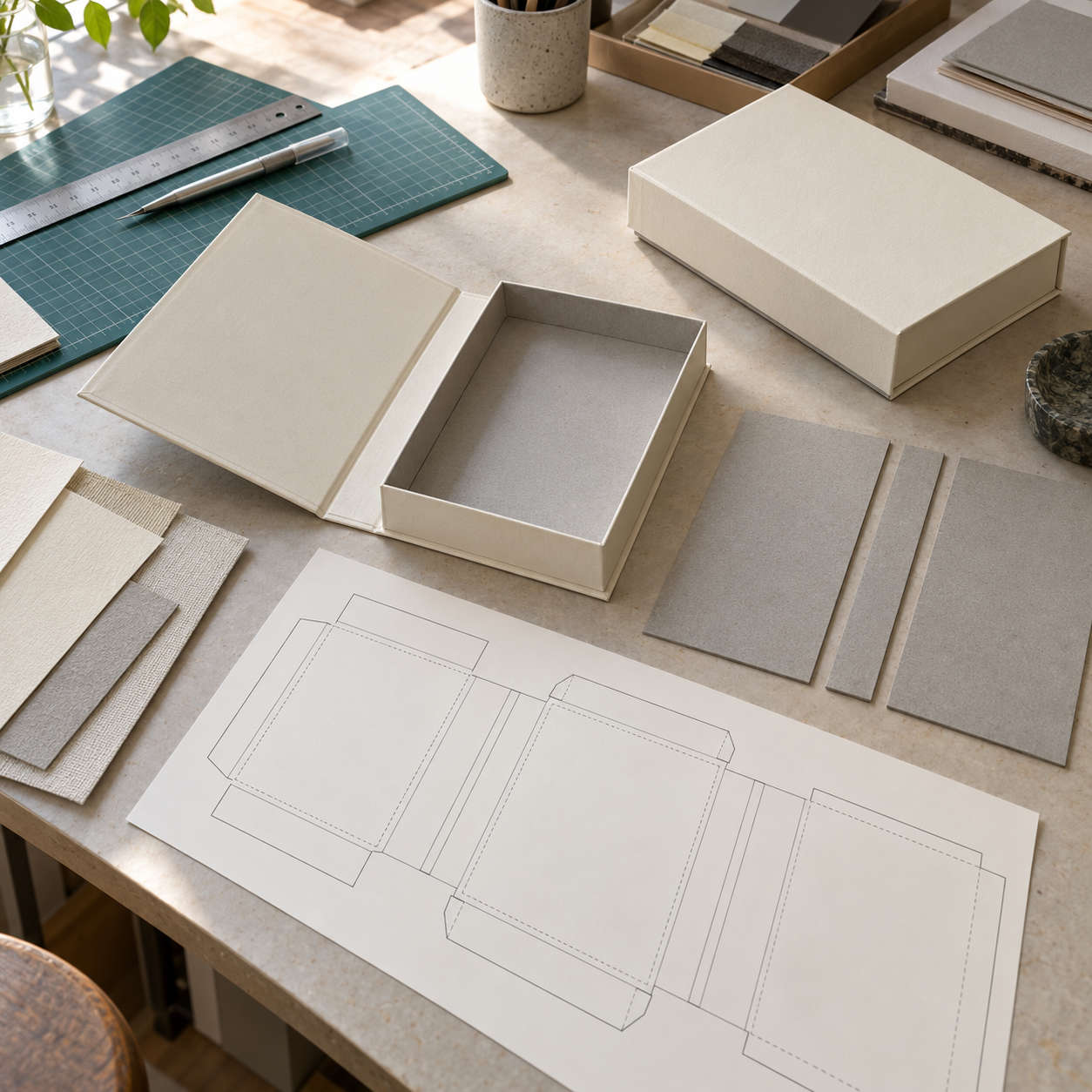
The structure on the table: dieline, board blanks and one open, one closed box — the four lines to agree in writing before sampling. (Illustrative render)
How do you size the box to the contents?
Measure the contents first, then let the box follow.
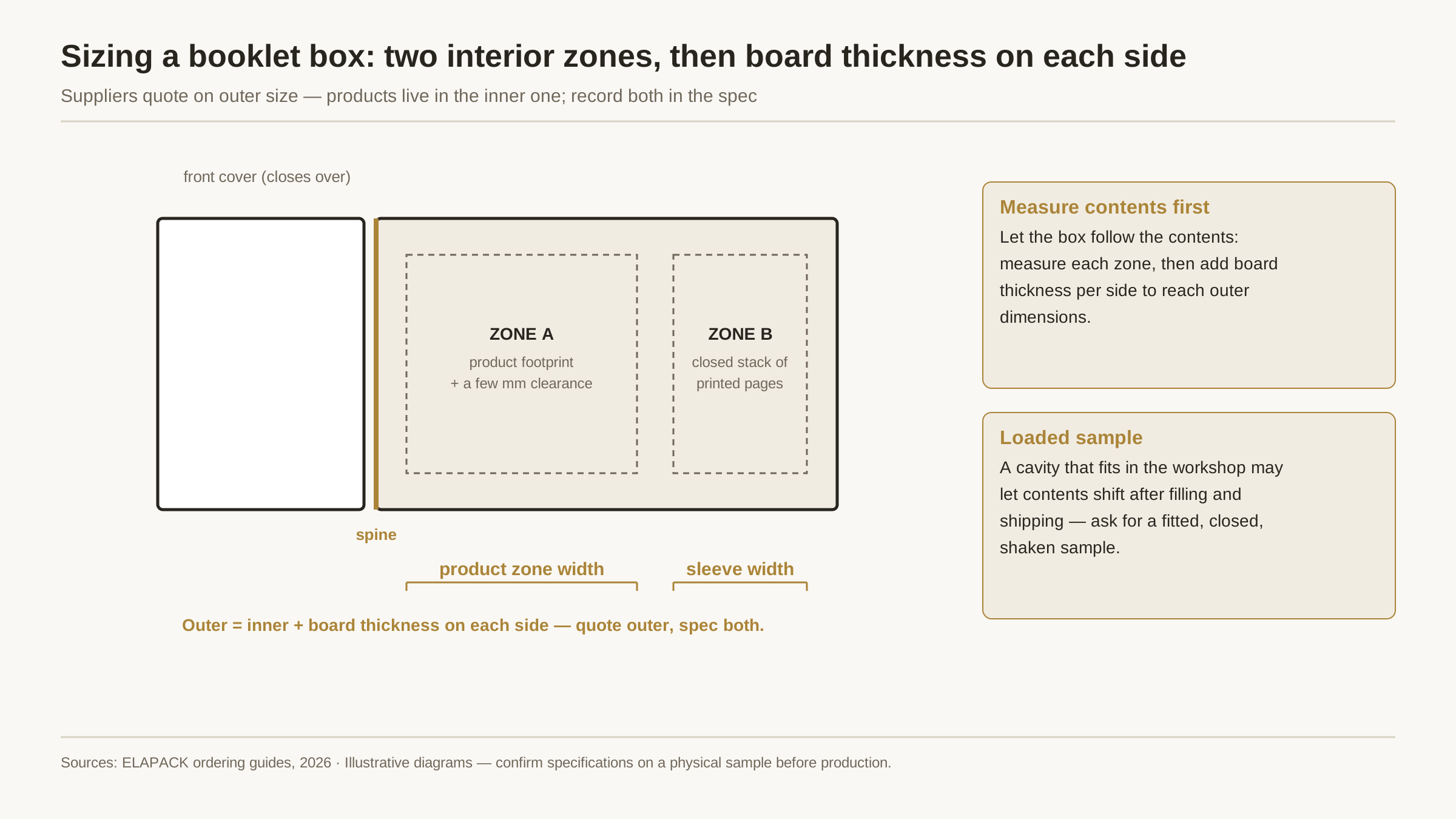
Plan the interior as two zones — product footprint with clearance, plus the closed stack of printed pages — then add board thickness per side. For a product cavity plus a page sleeve, plan the interior as two zones and measure each: the product footprint with a few millimetres of clearance, and the closed stack of printed pages. Add the board thickness on each side to get outer dimensions, and record inner versus outer dimensions separately in your spec — suppliers quote on outer size but products live in the inner one. The measurement conventions, inside-versus-outside numbering and clearance rules are laid out step by step in the box dimensions guide.
One practical note: booklet boxes travel well when the contents are held under light pressure. A cavity that exactly fits the product in the workshop may let it shift after the box is filled, sealed and shipped, so ask for a loaded sample — fitted, closed and shaken — before approving production.
Artwork zones on a book-shaped box
The cover has three printable zones: front cover, spine and back panel. The spine is the narrowest zone and the one buyers most often under-plan. Text on a spine must survive being read at a glance on a shelf, which means large, high-contrast elements; fine detail that works on the front cover can close up on a wrapped spine edge. Because the cover wraps around board edges, artwork also needs bleed on every folding edge — confirm the exact bleed allowance with the factory rather than using a generic figure, since it follows the board thickness of your specific build.
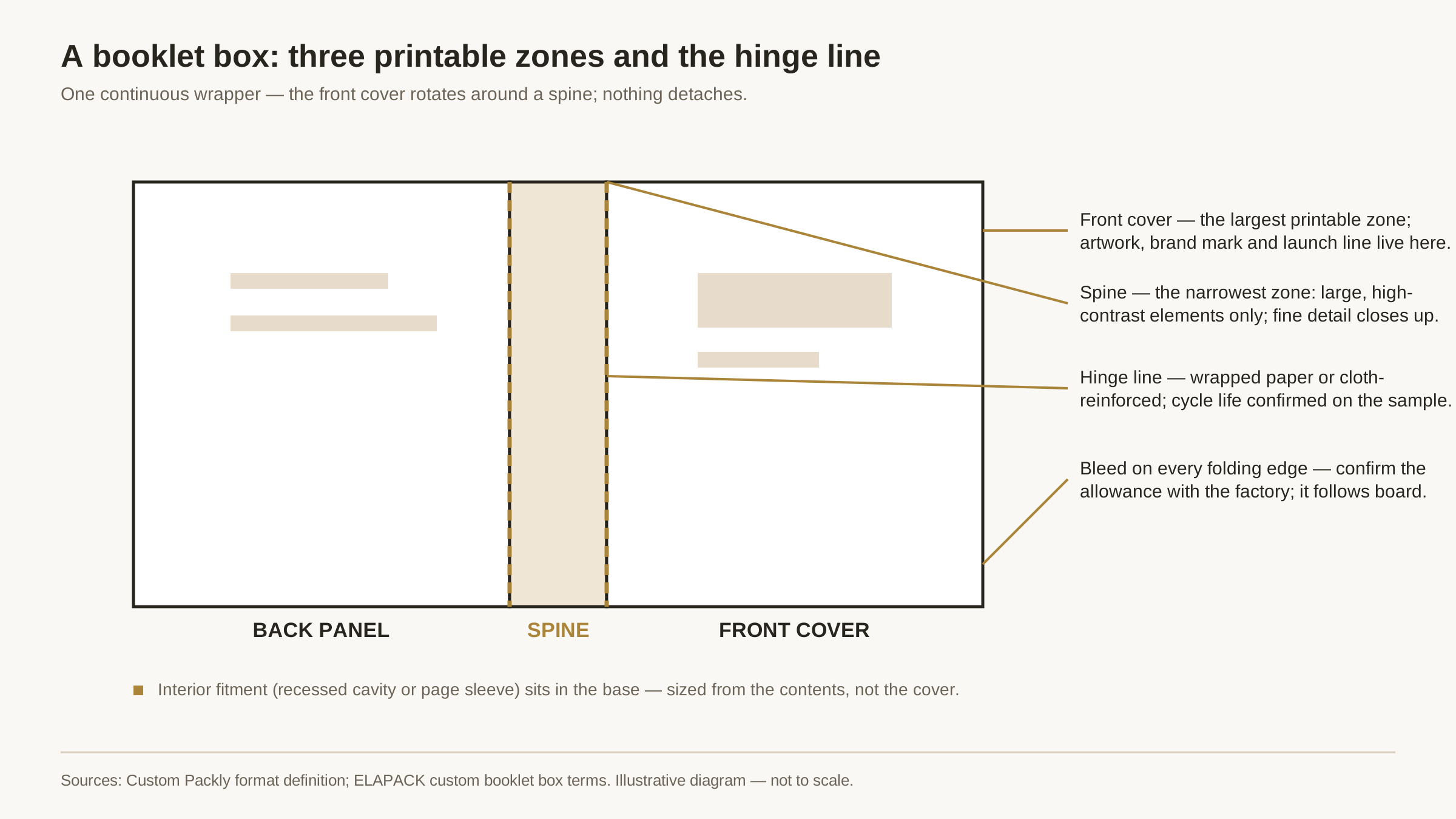
The three printable zones are not equal: the front cover carries the artwork, the spine only survives large high-contrast elements, and every folding edge adds a bleed requirement.
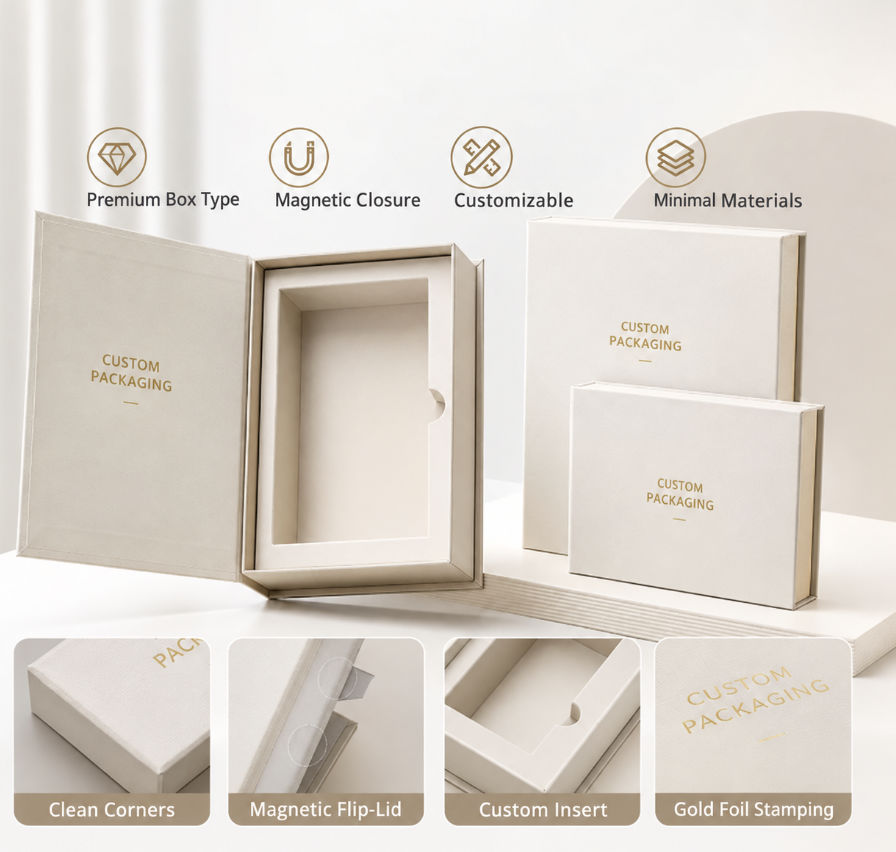
Cover finish at close range: mark, foil edge and closing flap read together as one cover — the zones and the finish are decided on the same sample. (Illustrative render)
Ordering: samples, quantities and timing
The order path mirrors the rest of the custom rigid line. A custom sample costs 25 US dollars plus 20 US dollars shipping and takes 3–5 days to make; order it after the structural lines above are agreed, and use it to check the hinge feel, the interior fit and the cover registration together. Production runs from 200 pieces, with lead times typically 15–20 days after sample approval and payment receipt, confirmed per order. Enquiries are answered within one business day, and the free dieline preview is issued before any sample fee, so the structure can be checked on paper before anything is cut.
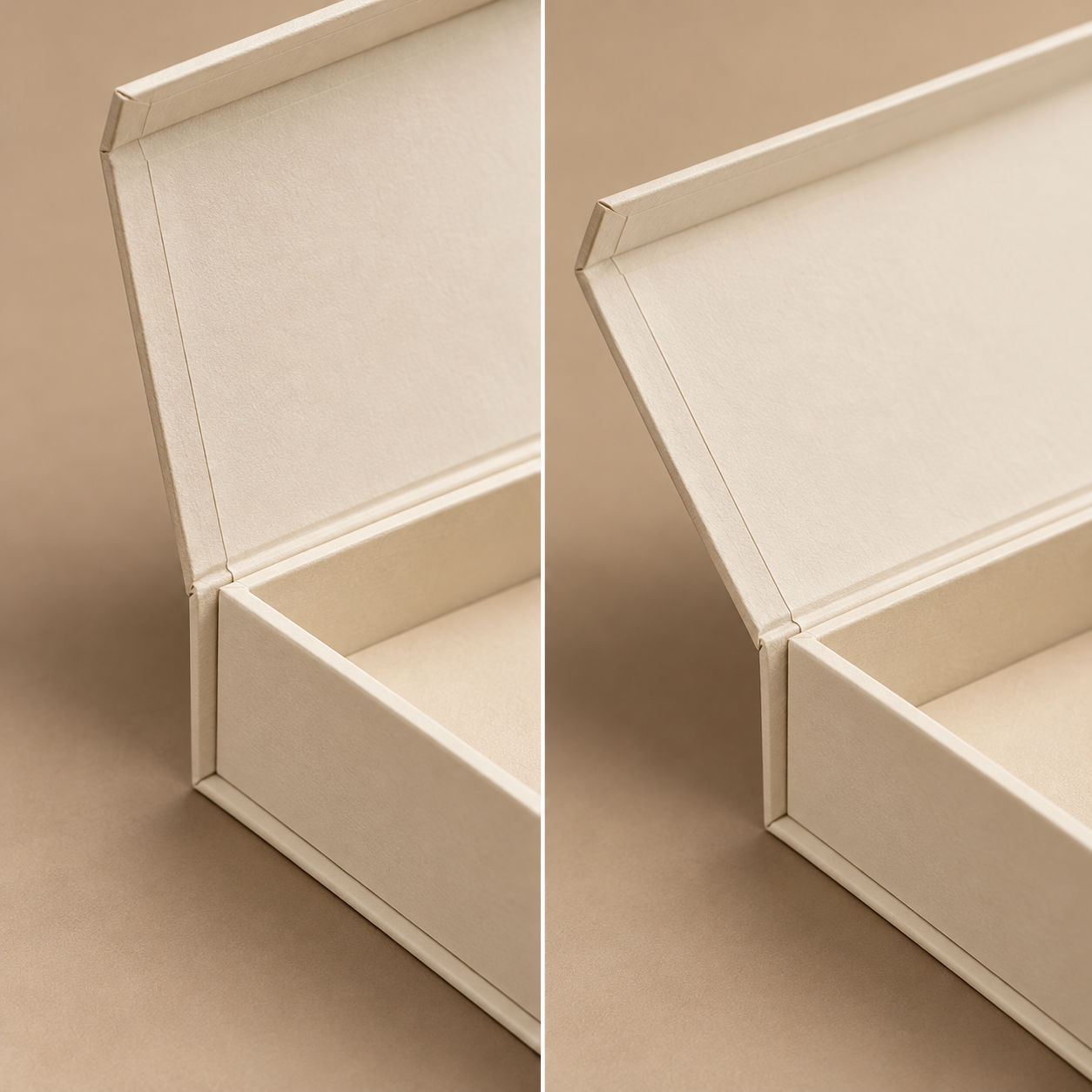
Blank boxes at the sample stage: hinge, fit and structure are checked on the unbranded box before any artwork goes on. (Illustrative render)
For seasonal launches, work backwards from the in-hands date: sample approval, then production, then outbound shipping, then any third-party assembly of pages or inserts. Launch mailers that miss their date lose most of their value, so the box is one of the first items to lock, not the last.
Ready to price a design? Request a quotation — enquiries are answered within one business day.
Sources
- Custom Packly — Book-Style Rigid Boxes — https://custompackly.com/packaging-styles/rigid-boxes/book-style-rigid-boxes
- Custom Boxes Inc — Custom Booklet Boxes — https://www.customboxesinc.com/custom/booklet-boxes/
- ELAPACK confirmed trade terms — elapack.com
Frequently asked questions
What is the minimum order for custom booklet boxes?
The minimum order is 200 pieces, like the rest of the custom rigid line. The run shares tooling across all units, so a single structural design at 200 pieces is the entry point; multiple cavity layouts inside one order are quoted as variants of the same dieline where the outer structure is shared.
How long do custom booklet boxes take to produce?
Production typically takes 15–20 days after sample approval and payment receipt, confirmed by order. Sampling adds 3–5 days in front of that, and outbound shipping time depends on the freight method chosen, so full programme dates should be planned from the sample stage onward.
Booklet box or two-piece rigid box — which should I order?
Order the booklet format when the opening ritual and a page-like presentation carry the brand message: press kits, launches, catalogues, curated sets. Order a two-piece rigid box when units are stored, stacked and reopened often. If the deciding factor is the premium closure feel rather than the book shape itself, a magnetic closure box is usually the more durable option, and the construction trade-offs are compared in the magnetic gift boxes guide.
Can the box hold printed pages as well as a product?
Yes — that is one of the format's strengths. A wide-spine booklet box can carry a product cavity on one side and a sleeve or strap for printed pages on the other, in one structure. Send the closed page stack dimensions with the enquiry so the sleeve is sized to the actual catalogue, not to an estimate.