
# What Is a PR Box? Contents, Structure and Ordering for Brands
Key takeaways
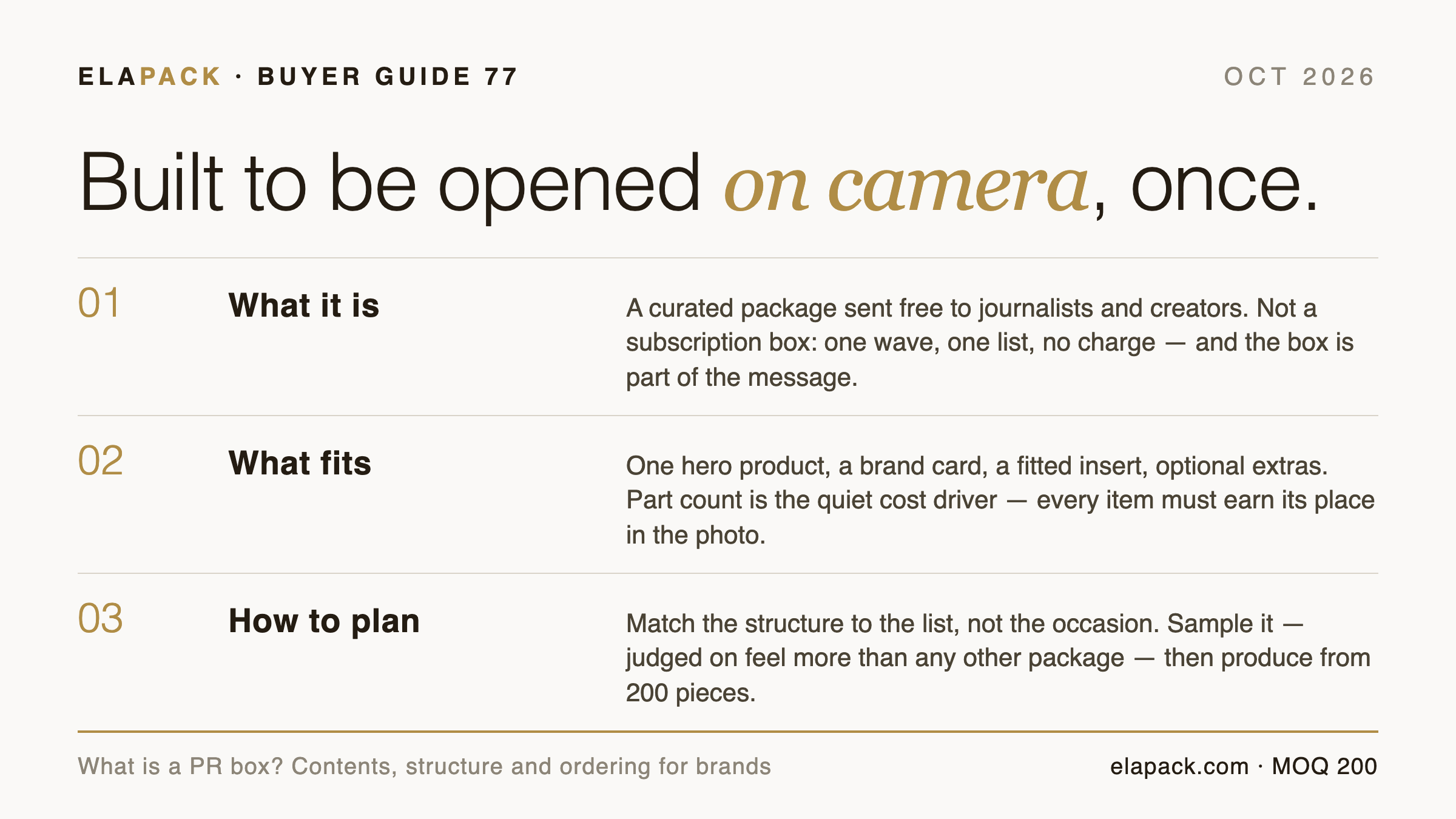
A PR box is a curated, no-charge package sent once to journalists and creators, structured so the first on-camera impression is designed rather than accidental.
- Recipients do not pay; the sender chooses the contents, and the package is built to be opened on camera.
- Industry guides frame it as brand experience: packaging craft connected to the reach of influencer content.
- Three structures cover most mailers — rigid box with fitted insert, foldable rigid, printed folding carton — matched to list size, not occasion.
- Entry order is 200 pieces; sampling USD 30 plus USD 25, production typically 15–20 days after approval and payment.
Last updated November 2026.
A PR box is a curated package a brand sends, free of charge, to journalists, content creators and industry contacts, so that the recipient experiences the product and — if the box does its job — talks about it. The box is not the gift wrapping; it is part of the message. This guide explains what goes in one, how the packaging is structured, what it costs to produce, and how to plan the order, written for the marketing teams and brand managers who commission them.
Quick answer: a PR box pairs a small product selection with a branded structure, a card that says who you are, and contents that photograph well. Rigid boxes with inserts are the standard carrier for launch mailers; plan one structural design across the full mailing list, sample it, and order from 200 pieces.
What is a PR box — and what is it not?
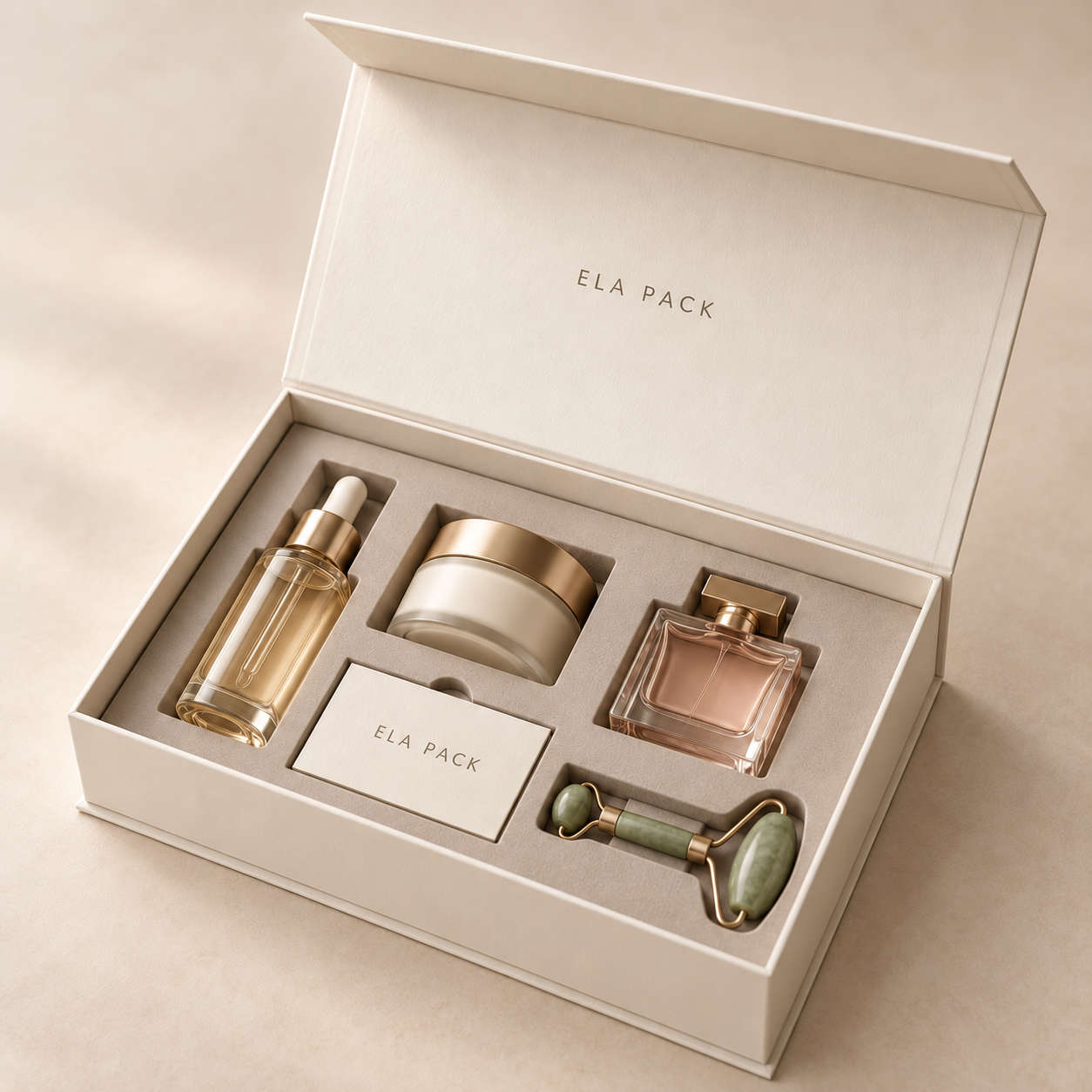
The defining traits: the recipient does not pay; the contents are chosen by the sender, not requested by the receiver; and the package is designed to be opened on camera. Unboxing is the moment the box is built for — the lid resistance, the first visible layer, the way the product sits in its cavity all appear in the photos and video that follow. Industry writing matches the framing: GPL Pak calls it a brand asset where "a luxury PR box connects the offline craft of packaging with the online reach of influencer content," and Swanky’s strategy guide defines the send as "a package containing carefully selected items to be sent to a list of influencers."
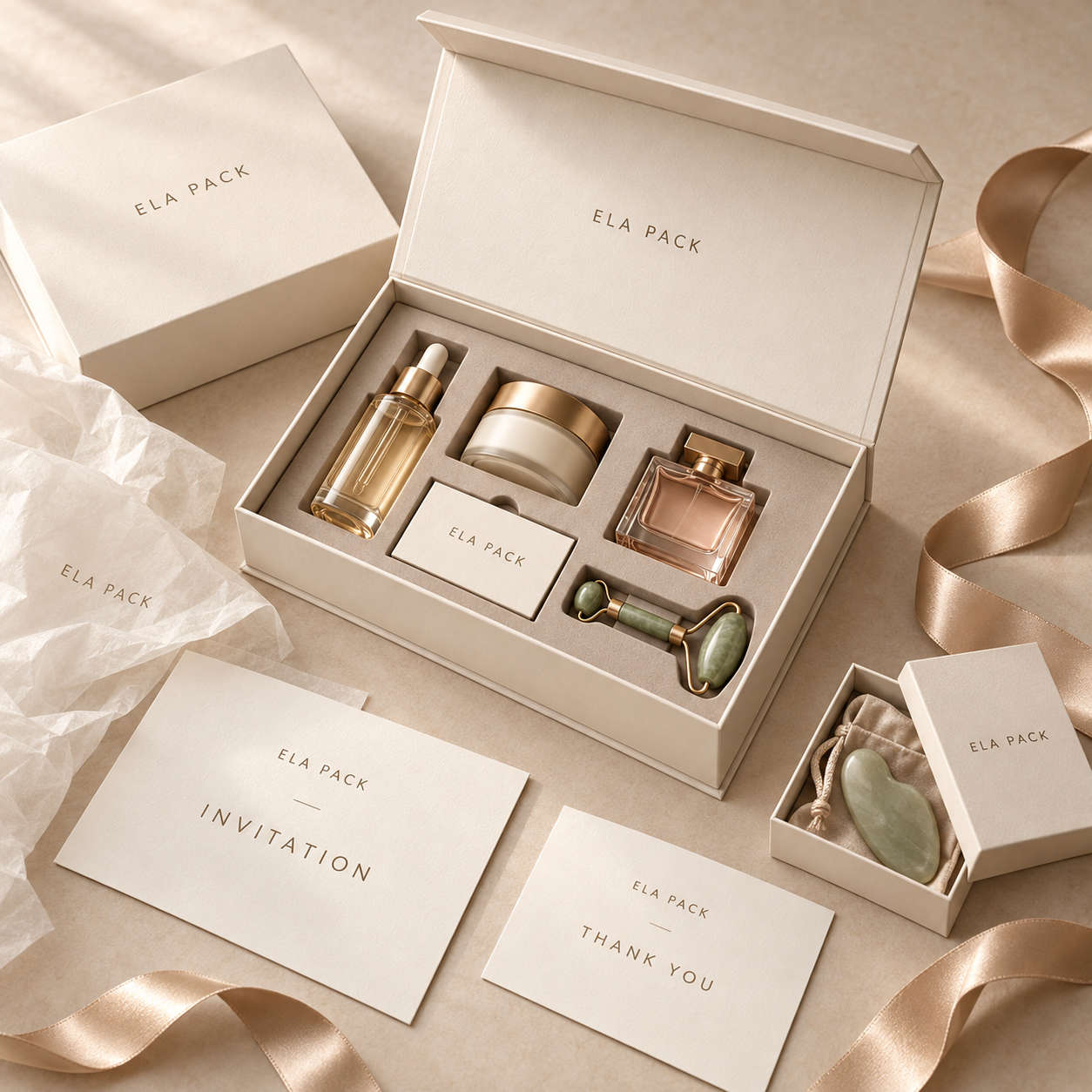
The opened mailer as the camera meets it: lid resistance past, first visible layer showing, each product seated in its own recess. (Illustrative render)
It is not the same thing as a subscription box, which goes to paying customers on a recurring schedule and optimises for monthly variety and postal cost. A PR box goes out once, in a concentrated wave, to a curated list. The recurring-programme logic — cadence planning, cost-per-box budgeting across months — is covered in the custom subscription boxes guide; everything in this article is about the one-time mailer.
What goes inside a PR box?
Across product launches, the contents follow a consistent pattern:
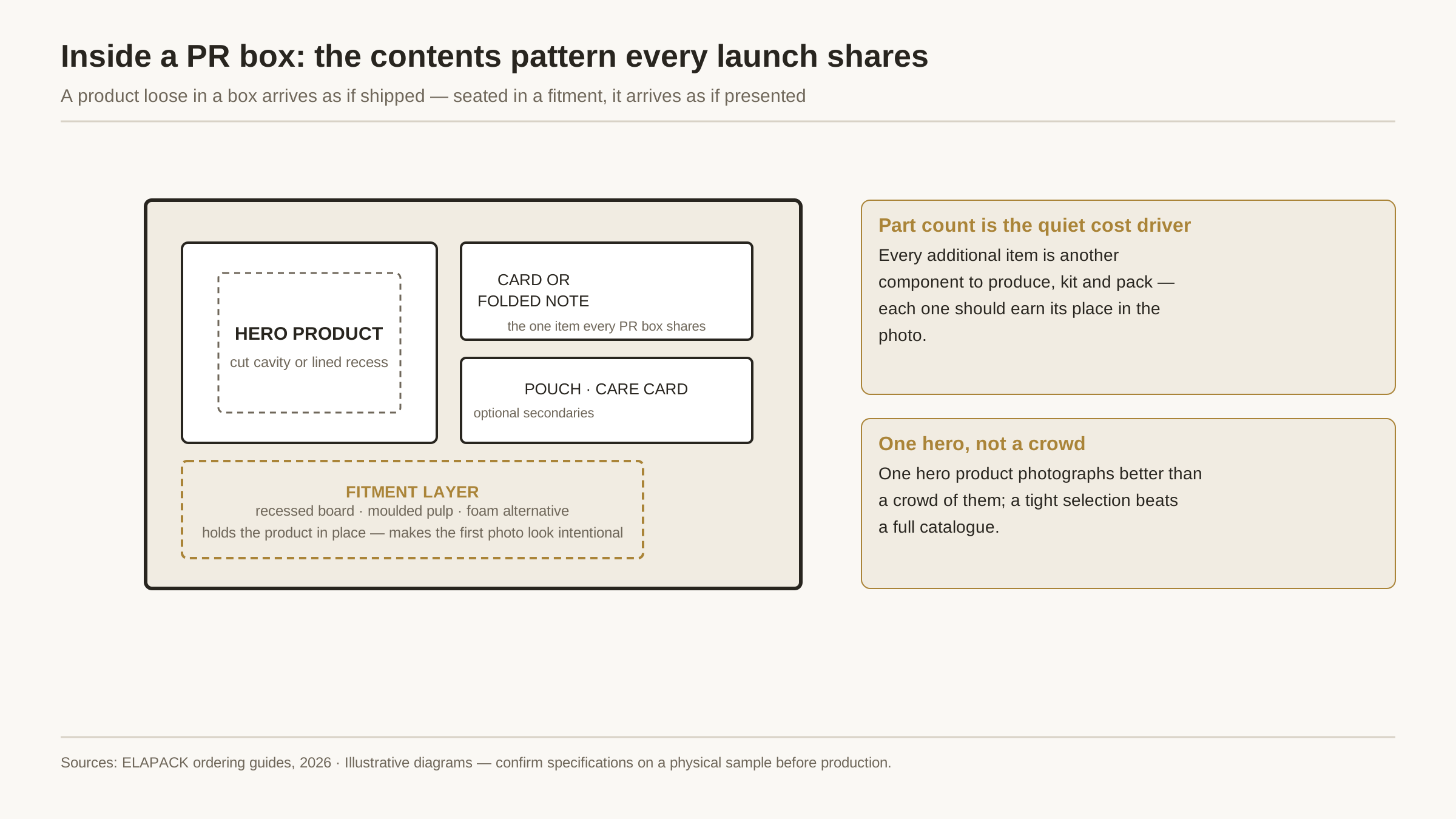
The fitment is what separates presented from shipped — a cut cavity or lined recess is the layer the first photograph shows.
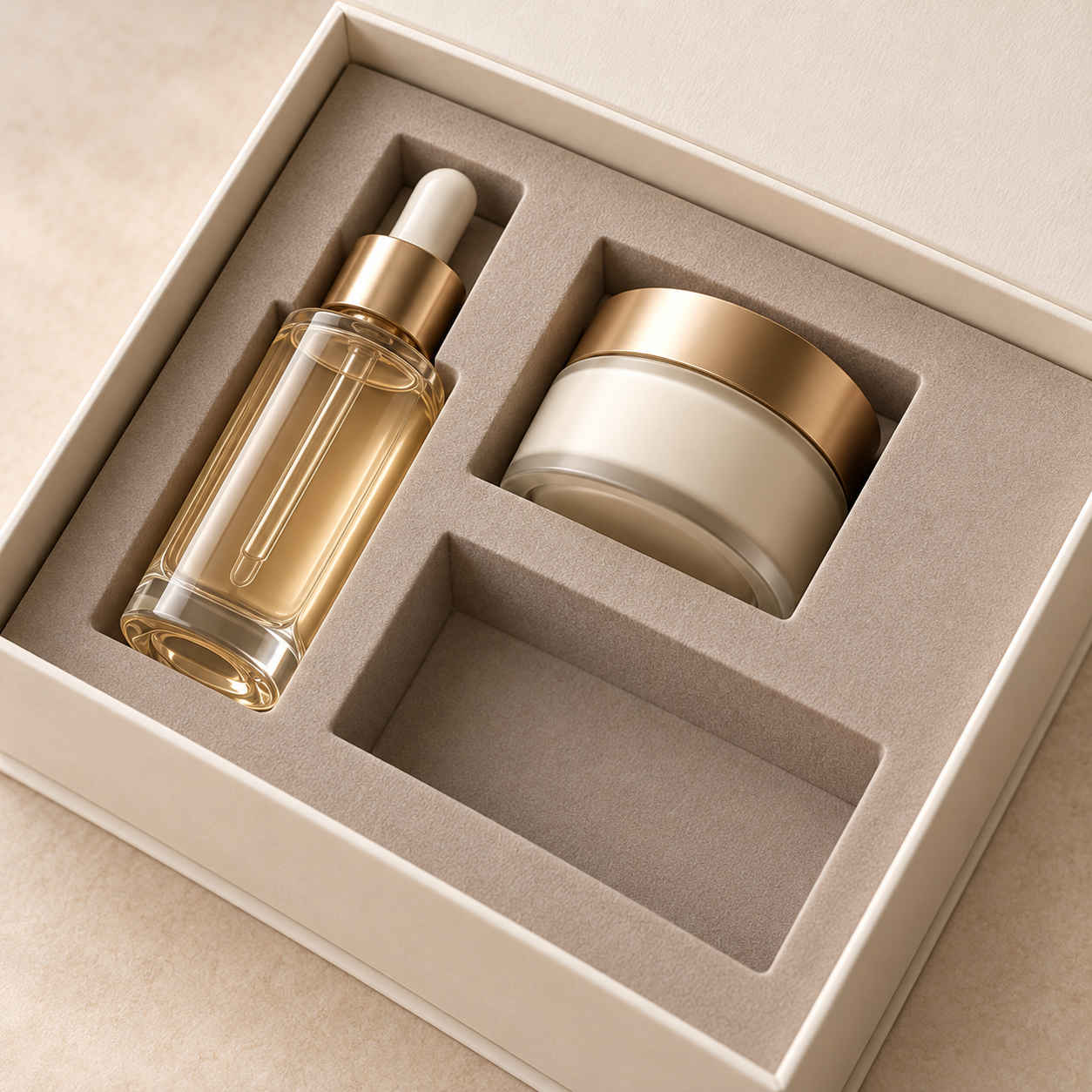
A packed box at presentation: the mark on the lid, the insert doing the arranging, the product ready for the first photograph. (Illustrative render)
- The product itself, or a tight selection. One hero product photographs better than a crowd of them.
- A card or folded note carrying the brand, the launch context and any information the recipient needs. This is the one item every PR box shares.
- A protective and presentational fitment holding the product in place — the layer that makes the first photo look intentional.
- Optional secondary items: a small fabric pouch for accessories, a care card, a sleeve of printed pages for press background.
The fitment deserves as much attention as the product. A product loose in a box arrives as if shipped; the same product seated in a cut cavity or a lined recess arrives as if presented. The packaging inserts guide compares the insert systems — recessed board, moulded pulp, foam alternatives — and the same trade-offs apply inside a PR box at mailing scale. For small accessories that accompany the hero product, a branded pouch keeps loose items from rattling; the custom pouches with logo guide compares the printing and label methods.
How do you choose the structure?
Three structures cover most PR mailers:
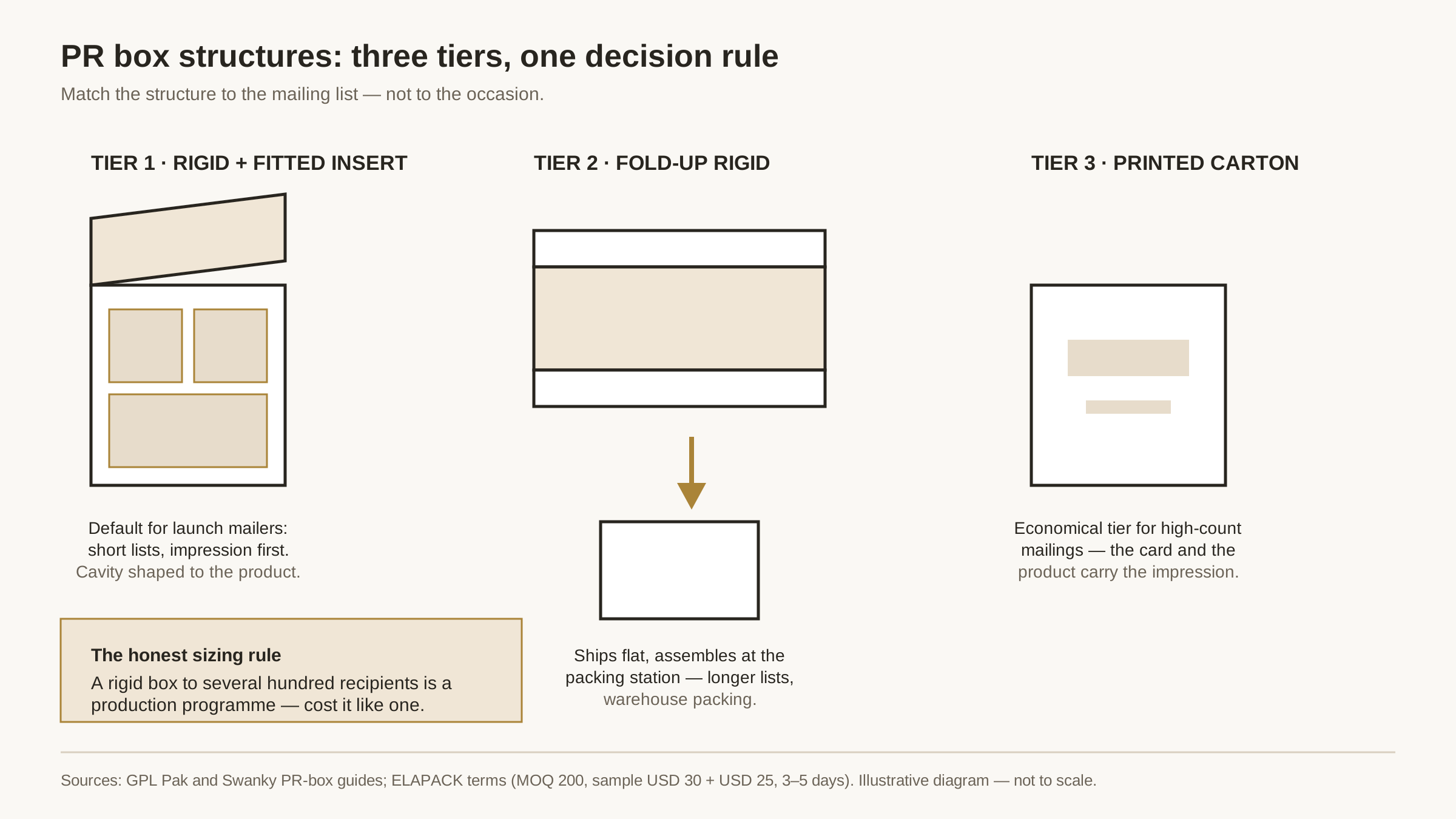
All three tiers are produced from 200 pieces with the same sampling path — what changes between them is freight volume, packing labour and how much of the impression the structure itself carries.
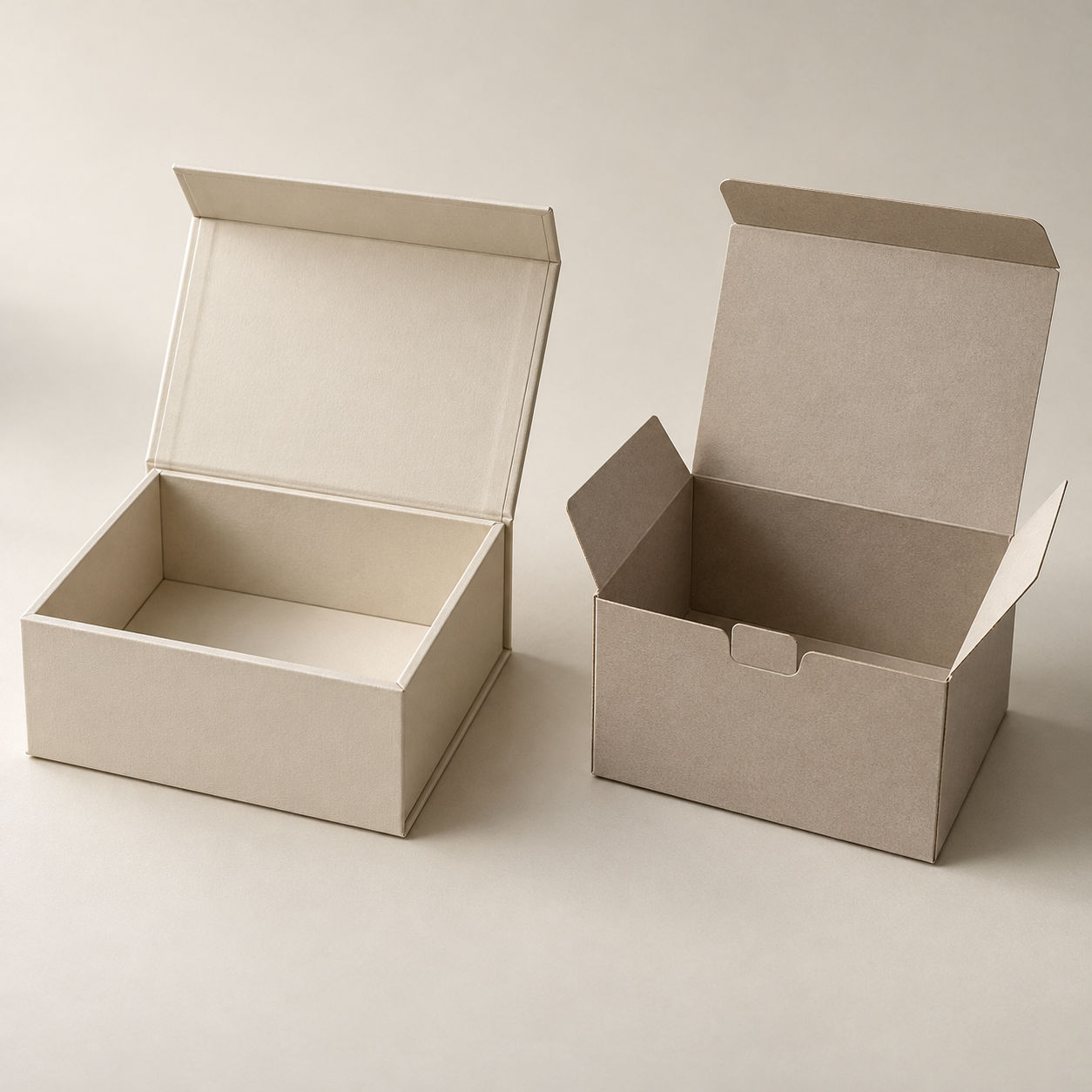
Two blank structures at the first decision: rigid magnetic-closure box versus printed folding mailer — the same list, two different openings. (Illustrative render)
- Rigid box with a fitted insert. The premium option and the default for launch mailers: wrapped-board construction, a lid that lifts or folds back, and a cavity shaped to the product. A book-style hinged variant — the cover swinging open along a spine — is a common choice for press materials, and the booklet box guide covers that structure in detail. Build and finish options are covered in the rigid box guide. Best when the list is short and the impression matters most.
- Foldable rigid (fold-up) box. Ships flat and assembles into a rigid-feeling box at the packing station. Best for longer lists and warehouse packing, where shipping bulky assembled boxes would dominate cost.
- Printed folding carton. The economical tier for high-count mailings where the card and the product carry the impression, not the box.
The honest sizing rule: match the structure to the list, not to the occasion. A rigid box sent to several hundred recipients is a production programme, not a gesture, and should be costed like one.
Quantities, samples and cost behaviour
PR boxes are produced like any custom packaging: one structural design, one set of tooling, one print run, split across the mailing list. The entry order is 200 pieces; a longer list either deepens the run at a better unit cost or splits into waves, with the second wave reusing the same dieline. A custom sample costs 25 US dollars plus 20 US dollars shipping and takes 3–5 days to make — order it, because a PR box is judged on physical feel more than almost any other package a brand commissions. Production typically runs 15–20 days after sample approval and payment receipt, confirmed by order, and enquiries are answered within one business day.
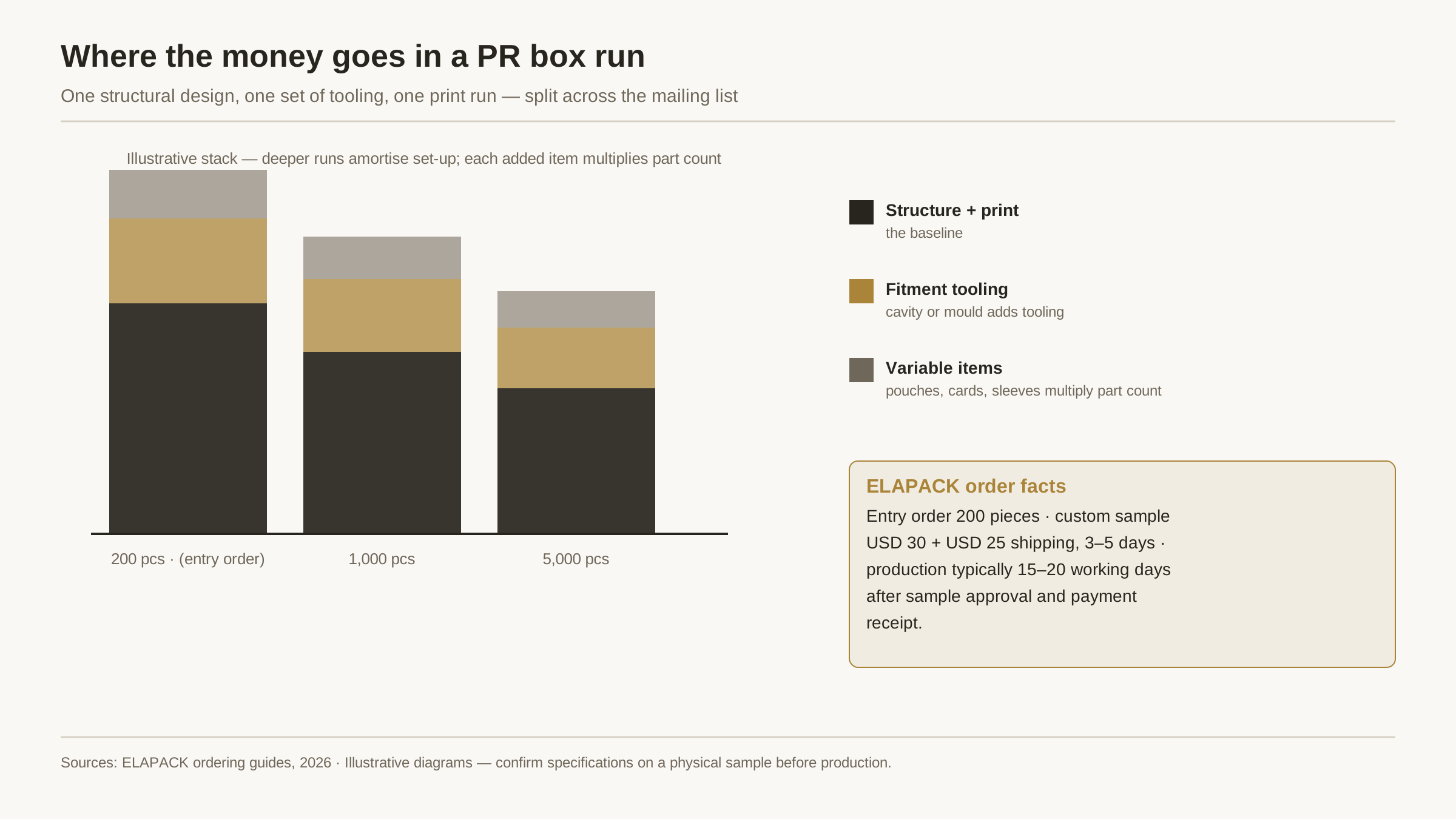
One dieline amortises across the run and across waves; every additional item in the box is another component to produce, kit and pack.
Where the money goes is predictable: structure and print set the baseline, the fitment adds tooling, and the variable items (pouches, extra cards, sleeves) multiply the part count. Part count is the quiet cost driver in PR packaging — every additional item in the box is another component to produce, kit and pack, so each one should earn its place in the photo.
Planning the send
Work backwards from the send date. The box must be in hand before packing begins, and packing a few hundred boxes with multiple components takes days, not an afternoon. A workable sequence: agree structure and contents, sample and approve, produce, then pack and dispatch — with the freight method chosen early, because express delivery of a heavy rigid box to a long list can exceed the box's own production cost. For date-anchored sends such as product launch days or seasonal gifting, lock the packaging order first; it is the item with the least schedule flexibility.
The full kit before it ships: box, cards, pouch and tissue are separate components, each one produced, kitted and packed. (Illustrative render)
One planning decision worth making explicitly: whether all recipients get the identical box, or the list splits into a presentation tier for key contacts and a standard tier for the wider list. Two structures from one factory can share visual identity while differing in build — but the decision must be made before tooling, not after.
Ready to price a design? Request a quotation — enquiries are answered within one business day.
Sources
- GPL Pak — Why Luxury Brands Invest in Custom PR Boxes — https://www.gplpak.com/why-luxury-brands-invest-in-custom-pr-boxes-for-influencer-marketing
- Swanky — How to Start a PR Box Strategy — https://swankyagency.com/how-to-start-pr-box-strategy
- ELAPACK confirmed trade terms — elapack.com
Frequently asked questions
What is a PR box in packaging terms?
It is a branded box, usually rigid with a fitted insert, packed with a curated product selection and a brand card, sent free to media and creator contacts. Structurally it uses the same custom-box systems as retail packaging; what makes it a PR box is the single-wave, no-charge, on-camera purpose.
How many PR boxes should I order?
The minimum production order is 200 pieces. Size the run from your mailing list: one structure across the whole list is the most cost-effective, and a second tier for key contacts is possible if planned before tooling. Runs beyond the first tier improve unit cost but raise the upfront commitment, so match the order to a list you actually have.
How far in advance should PR boxes be ordered?
Allow sampling plus production plus packing plus freight: a custom sample takes 3–5 days, production typically 15–20 days after sample approval and payment receipt, and packing time scales with the part count per box. For a dated launch, start the packaging enquiry as soon as the contents are fixed — the box is usually the longest-lead item on the checklist.
Can I put multiple products in one PR box?
Yes, and multi-item boxes are common for curated introductions. Use an insert with separate cavities so each item has its own place, and keep the total part count deliberate: every extra component adds production, kitting and packing work. Send the full contents list with dimensions when requesting a quote so the layout is planned around the real items.