
Product facts and ordering terms below are this factory's published trade terms. Competitor specs in the comparison sections are as published on supplier and marketplace pages read 15 October 2026, quoted for comparison only. The sizing method is geometry — card height from drop length, width from pair spacing — and needs no supplier claim to check. No environmental claims are made on this page.
Earring cards are the cheapest square centimetres in a jewelry programme and the easiest to get wrong: a card cut too short turns a pair of drop earrings into a crowded tangle, and a slot punched for studs will not hold a fishhook. This guide stays on the card itself — formats, slot styles, the sizing arithmetic, the cardstock bands the market prints on, and what ordering at each supplier tier actually costs. It sits beside the jewelry display and storage guide (trays and showcases) and the jewelry packaging overview (boxes, pouches and sets), and shares its paper-and-print logic with the perfume sample cards guide.
Quick answer: specify the slot style by earring type first, then let the earring set the card size — height from drop length plus a brand band, width from pair spacing — and choose cardstock in the market's standard 14–18 pt cover band. Printed and die-cut cards from this factory run from 200 pieces per design in 15–20 working days; a USD 25 custom sample plus USD 20 shipping proofs the card, slot and print before the run.
What the card has to decide
A card does two jobs in one piece of cardstock: it presents the pair at retail — price, name, brand — and it holds the earrings securely enough to survive being picked up, turned over and slid across a counter. The two jobs pull in opposite directions. Presentation wants clean space and a quiet logo; holding wants slots, punches and notches exactly where the earring needs them.
That tension is why a card specified "same as last time but for hoops" fails. The slot system is the structure of the card, the way a lid is the structure of a box, and it changes with the earring type. Everything else — stock, finish, print — decorates that structure.
The card is also the layer buyers see first in a marketplace listing. A pair photographed on a sized, branded card reads as a product line; the same pair on a generic card reads as craft output. For brands running both retail and online channels, one card artwork serves both, which is why the spec is worth getting right before the first print run rather than after the second reorder.
Slot and punch styles by earring type
| Earring type | Holding feature | What it must fit | Spec decisions |
|---|---|---|---|
| Studs | Paired horizontal slots | post length + butterfly back | slot length vs post gauge, pair spacing |
| Fishhook / drops | Top punch or hook slot | hook wire curve | punch position vs drop length, card height |
| Hoops | Double notch or through-slits | hoop diameter when carded flat | notch pitch, card width for large hoops |
| Huggies / clips | Snap-frame slit | closure bulk | slit reinforcement for heavier pairs |
Two practical notes from the carding action itself. Butterfly backs go on behind the card, so slot length must clear the post with the back attached — the most common sizing miss on stud cards. And fishhook styles hang from the top band of the card, which means the hook punch and the brand mark compete for the same centimetres; decide which sits higher before artwork, not after.
For pairs that ship flat but hang at retail, a hanging punch (the round hole at the card top) is a separate feature from the earring slots below it — specify both positions in the dieline so the hung card does not tilt.
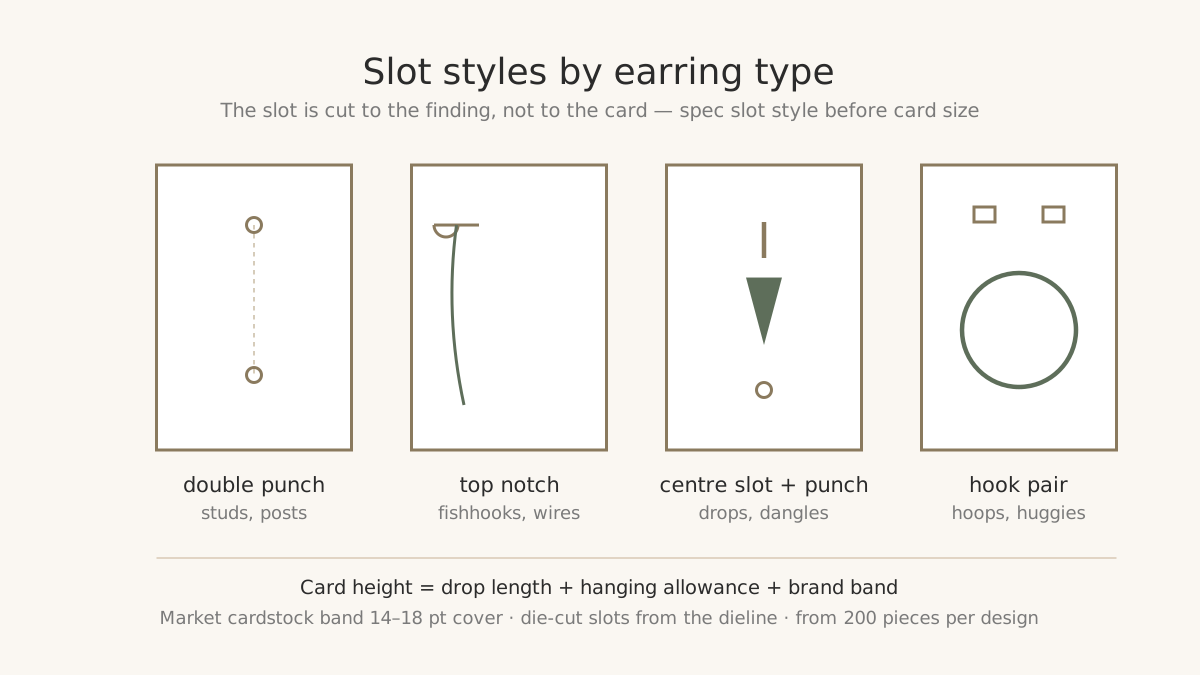
Fig. 1 — Slot and punch styles mapped to the earring type each one holds.
Sizing the card correctly
Community questions from jewelry makers keep returning to one problem — how to size earring cards and necklace display cards correctly (questions read 15 October 2026) — because most sellers inherit a card size instead of deriving it. The derivation is short:
Card height = drop length + holding allowance + brand band. Measure the earring hanging as it will card (hook engaged or post through), add room for the back or a second finding, and leave the band at the top for logo and price. A 4 cm drop with findings and a 2 cm band lands near a 7 cm card — the market's 2"×4" earring card format (Gold Image Printing, as published, read 15 Oct 2026) covers exactly this arithmetic for typical drops.
Card width = pair spacing + margins. Studs sit closer than hoops; a wide pair on a narrow card collides at the slots. When the same artwork must cover several earring types, size the card to the largest pair in the line and let smaller pairs sit with more air — cards look empty, earrings never look comfortable squeezed.
Necklace display cards follow the same logic with one change: the chain, not a finding, sets the length, so the slit position and card height come from the chain's hanging length. The market runs these from 2.25" squares up to 3.5" squares with short, standard and high slits (as published, read 15 October 2026) — pick the slit height by where you want the chain's curve to sit, not by stock availability.
Cardstock and finishes
The market prints jewelry cards on cover-weight board from 14 to 18 pt, with the finish doing the branding work: semi-gloss and matte as the workhorses, linen and felt weaves for artisan lines, soft-touch lamination at the top of the band (Gold Image Printing's published card menu, read 15 October 2026). What changes across that band is stiffness and edge behaviour — a 14 pt card flexes when handled, an 18 pt card reads as part of the product.
From this factory's side, the card is a printed-and-die-cut paper product: CMYK print, foil stamping, embossing and debossing on the confirmed process list, with slots and punches cut to the dieline — the die cutting and dielines guide describes how the cutting form prices and what a new form costs (USD 50–100 when a new die is needed).
Ordering data: marketplace packs vs factory runs
| Tier | What you get | Published terms |
|---|---|---|
| Marketplace small packs | generic shapes, template print, ship fast | Etsy listings from about USD 14.85 per 100 cards (read 15 Oct 2026) |
| Domestic print shops | full print menu, standard sizes | Gold Image Printing: 50–5,000 piece tiers, 3-business-day turnaround (read 15 Oct 2026) |
| This factory | custom dieline, print and finish, made with the rest of the programme | 200 pieces per design, 15–20 working days, stock sample free + USD 20 shipping, custom sample USD 25 + USD 20 in 3–5 days |
The three tiers are not really competitors. The marketplace tier sells convenience at retail-per-card pricing; the print-shop tier sells a full finish menu in domestic volumes; a factory run sells the card as part of the packaging programme — same dieline logic as the box, same print colour control, and the option to match card stock and pouch fabric to one Pantone reference. For a brand already ordering custom jewelry pouches or boxes, adding the card to the same production calendar is the difference between a matched line and a matched-after-the-fact one. First-order budgeting for the full set — what to order first when the budget is tight — is walked through in the small business packaging guide.
Cards as part of the jewellery programme
The card is the presentation layer that travels: box or pouch carries the pair, card presents it, display holds it at the counter. Programmes that run all three from one supplier keep one colour system across paper, fabric and acrylic — the same reason the jewelry packaging collection groups boxes, pouches and display as one system. At the counter, acrylic earring displays and velvet necklace displays hold carded pairs upright; the card's hanging punch, specified back in the sizing section, is what makes them compatible.
Spec a card programme: send the earring list with drop lengths and finding types through the contact page, and the slot map and card sizes come back with the quote. Or read the adjacent decisions first — the pouch logo guide for print-method economics, the samples guide for what a USD 25 card sample proves.